

























AI Storybooks for Kids: Safe, Meaningful Personalized Stories
AI storybooks for kids can sound exciting. They can also raise fair questions for parents.
Will the story feel safe? Will it be age-appropriate? Will it support imagination and reading, or will it feel like quick machine-made content?
At MIBOOKO, technology is not the point of the experience. The point is a personalized storybook that helps a child feel seen, engaged, and emotionally connected to reading.
MIBOOKO uses guided technology to help create stories shaped around the child, but the experience is built around family reading, emotional value, clear story structure, and quality.
This is not an open-ended chatbot for children. It is a guided personalized storybook experience created for parents who want something more meaningful than a generic story.
If you want to see the product experience directly, start with a personalized storybook for kids or see how MIBOOKO works from story choice to delivery.
🛡️ parent-first setup · guided story boundaries
No child photo required · Avatar-based personalization available
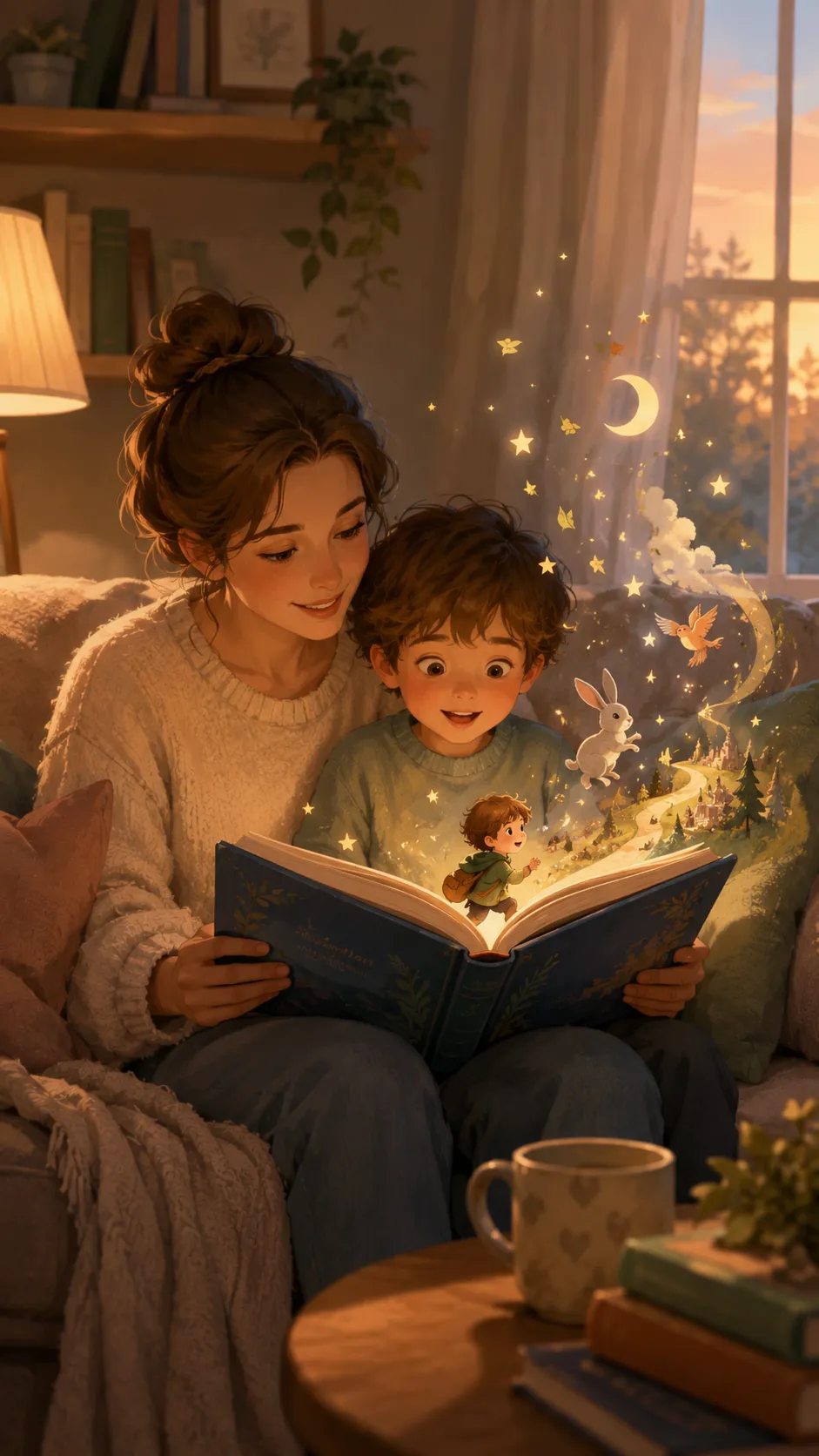
Can AI storybooks be safe for kids?
AI storybooks can be safe for kids when they are built with clear boundaries.
A safer AI storybook should use age-aware language, parent-guided personalization, privacy-conscious choices, and story structures that lead to warm, constructive endings.
The real question is not only whether AI is involved. The real question is how the story is created, what limits are built into the process, and whether the final book feels suitable for a child and meaningful for a family.
That is the difference between an open AI text generator and a guided personalized storybook experience.
For a deeper explanation, read our guide on whether AI storybooks are safe for kids and the MIBOOKO methodology and safety page.
What is an AI storybook for kids?
An AI storybook for kids is a children’s story created or adapted with the help of artificial intelligence.
Some AI storybook tools work like open generators. A parent or child enters a prompt, and the system creates a story from that prompt.
Other platforms use AI more quietly. The technology helps shape a story around a child’s name, age, appearance, interests, and chosen story direction, while the experience remains guided and structured.
MIBOOKO belongs closer to the second approach.
The goal is not to let a child interact freely with an AI system. The goal is to help parents create a personalized children’s book that feels coherent, warm, and worth reading together.
If you want the practical creation flow, read how an AI storybook generator for kids works from parent inputs to a personalized book.
Why parents are cautious about AI children’s books
Parents are right to be cautious.
Children do not experience stories as plain information. A story carries tone, emotion, conflict, reassurance, rhythm, and meaning.
A child may not be able to explain why a story feels too intense, confusing, or emotionally flat. But they can still absorb it.
That is why child-facing story systems should not behave like general AI tools. They need boundaries around age, language, emotional intensity, sensitive topics, privacy, and story resolution.
A responsible AI-assisted storybook should be built around:
- age-appropriate language
- clear story structure
- constructive conflict
- warm emotional resolution
- parent-guided setup
- privacy-friendly personalization
- honest product claims
MIBOOKO uses technology to support the story. It does not replace parental judgment, shared reading, or the emotional value of opening a book together.
You can also explore the research behind personalized storybooks and why self-relevant stories can support reading engagement.
MIBOOKO is a personalized storybook platform, not just an AI story generator
This distinction matters.
An AI story generator usually promises speed. You type something, and a story appears.
MIBOOKO is built around a different promise: a personalized children’s book where the child becomes the hero of a story shaped around their age, appearance, interests, selected theme, and reading moment.
The result is not meant to feel like disposable text. It is meant to feel like a book: something a child can read, hear, revisit, share, and remember.
Technology helps make personalization faster and more flexible. But the value of MIBOOKO is not “AI content.”
The value is a meaningful personalized storybook.
For more context, read our guide to personalized children’s books.
AI storybook generator vs MIBOOKO guided personalized storybook
| Area | Typical AI story generator | MIBOOKO guided personalized storybook |
|---|---|---|
| Core promise | Fast story text | Meaningful personalized book |
| Creation flow | Open prompt | Guided parent setup |
| Child role | Optional character | Child becomes the hero |
| Parent role | Prompt writer | Story co-creator |
| Personalization | Prompt-based | Name, age, look, theme, occasion |
| Story structure | Variable | Guided narrative arc |
| Emotional tone | Inconsistent | Child-aware pacing |
| Safety approach | Tool-dependent | Story boundaries |
| Photo use | Tool-dependent | Photo not required |
| Format | Mostly digital | Digital, print, audio |
| Best use | Quick experiment | Shared reading and gifting |
| Brand focus | AI output | Child experience and quality |
This is why quality in personalized children’s books matters more than speed alone.
A free-form AI story generator can be useful for experimenting with ideas. But a child’s storybook needs more than speed.
It needs emotional shape. It needs structure. It needs language that feels natural for the child’s age. It needs a beginning, development, and ending. It needs to feel like something parents can confidently share.
MIBOOKO is designed as a personalized children’s book experience. Technology helps create the book, but the final value is the reading moment between the child and the family.
How MIBOOKO uses guided technology
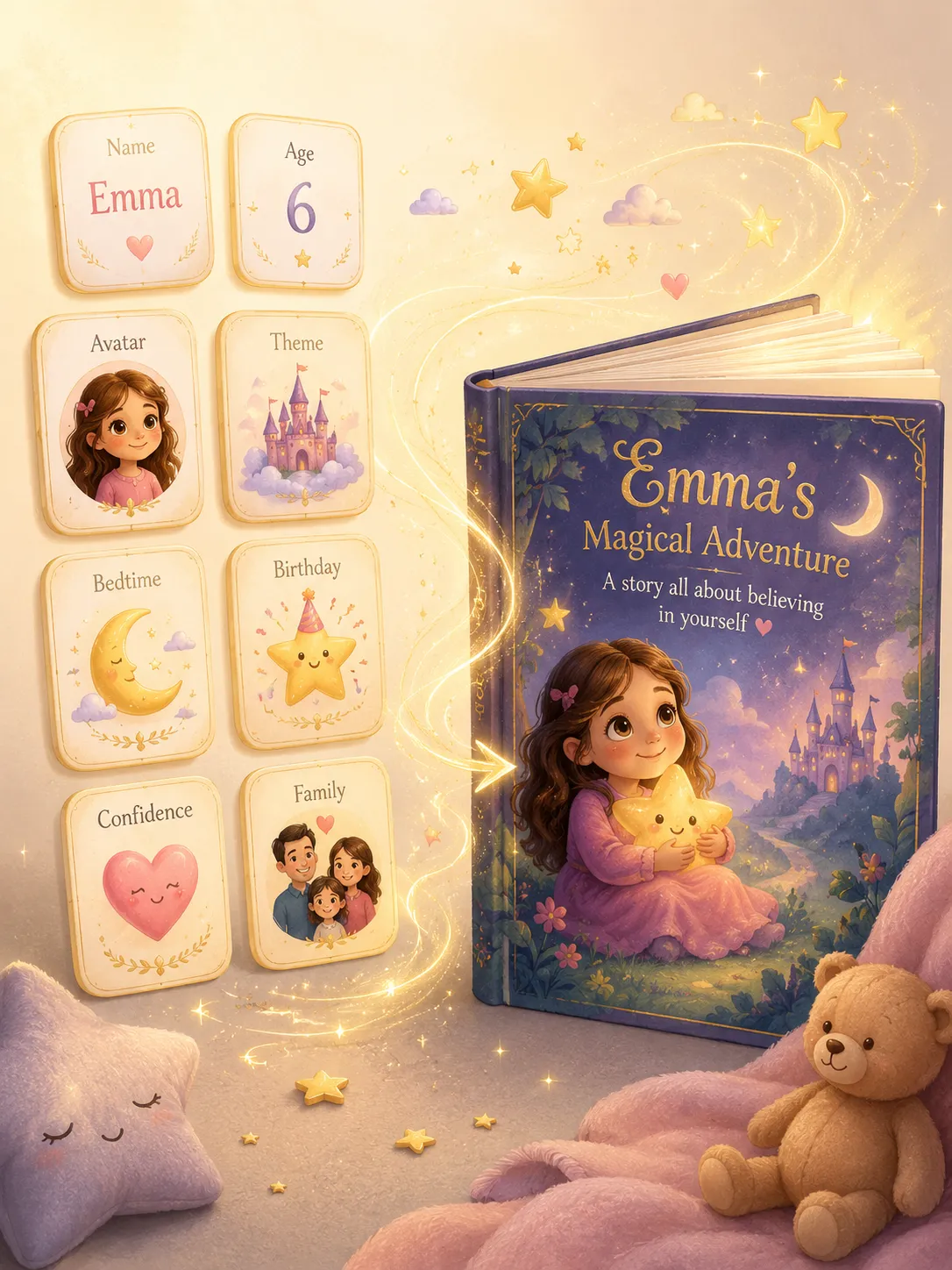
MIBOOKO uses guided technology to help create personalized children’s stories.
Parents provide the important creative direction. The system helps turn those choices into a coherent storybook.
The child can become the hero. The story can reflect their age, appearance, interests, family context, selected occasion, or chosen emotional theme.
Depending on the selected format, the story can become a digital book, printed book, audiobook, or parent voiceover experience.
Technology is useful because it makes deeper personalization possible without waiting weeks for a traditional custom publishing process.
But for the child, the technology should stay mostly invisible.
The important thing is not whether AI helped create the story. The important thing is that the story feels like theirs.
What makes an AI-assisted children’s book safer?
A safer AI-assisted storybook should not behave like an open-ended chatbot.
It should be built around a protected story experience. Parents should know what kind of content the system is designed to create, what information is needed, and what the child will receive.
Age-aware language
A story for a three-year-old should not sound like a story for an eight-year-old.
Age-aware language affects vocabulary, sentence length, emotional intensity, pacing, and the way problems are resolved.
Parent-guided personalization
A child should not need to guide the system alone.
The parent should choose the direction, provide the relevant details, and remain in control of the story setup.
Content boundaries
Children’s stories should avoid uncontrolled themes, inappropriate conflict, frightening turns, or confusing emotional endings.
Boundaries matter because children often return to the same story again and again.
Optional photo-free personalization
Some families are comfortable uploading a child’s photo. Others are not.
A parent-friendly storybook platform should offer a photo-free option, such as avatar-based personalization.
Families who prefer privacy-first personalization can read how to personalize a child’s story without uploading a photo.
Clear emotional resolution
A children’s story can include a challenge, but the challenge should lead somewhere constructive.
The child should not be left in uncertainty, fear, or emotional confusion.
Honest limits
No system should pretend to be perfect.
A responsible brand should explain what it does, what it does not do, and where parents should still use judgment.
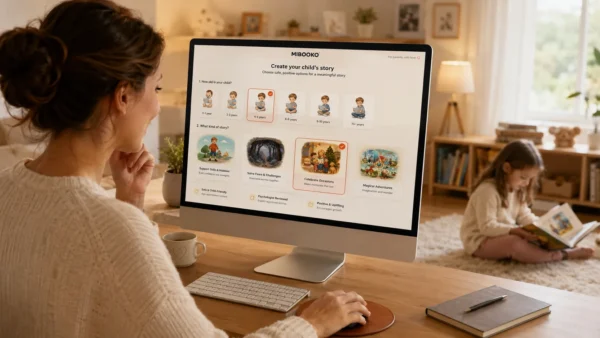
What parents should check before choosing an AI storybook?
Before choosing an AI storybook for a child, parents should ask:
- Is the parent in control of the setup?
- Is the story designed for the child’s age?
- Is a child’s photo required?
- Are photo-free options available?
- Are content boundaries explained?
- Does the story have emotional structure?
- Can the story become a real reading experience?
- Is the brand honest about what it does and does not promise?
These questions matter more than whether the product uses AI.
A beautiful reading moment is not created by technology alone. It is created when the story feels personal, safe, and emotionally right for the child.
When AI helps — and when it should stay behind the story
AI can help when it supports personalization.
It can help shape a story around a child more quickly than a traditional custom publishing process. It can help adapt the story direction. It can help create a book that feels more specific than a generic children’s story.
But AI should not become the emotional center of the product.
The child does not need an “AI experience.” The child needs a story that feels warm, exciting, reassuring, and personal.
Parents do not need a technical demonstration. They need a book they can confidently open with their child.
That is the role of technology in MIBOOKO: useful, guided, and in service of the story.
Why personalized stories can feel more engaging for children
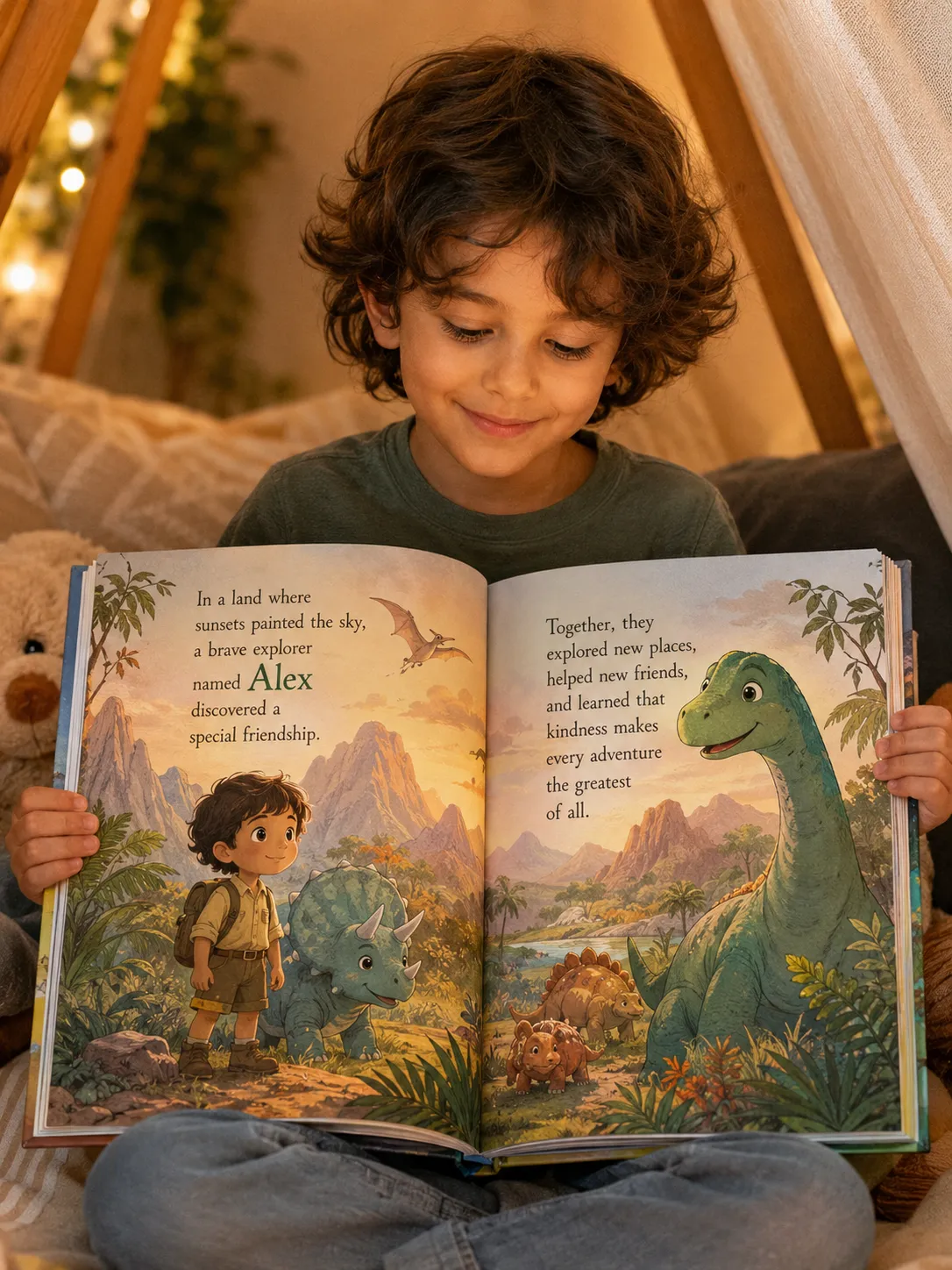
Children often respond strongly to stories that include familiar details.
When a child hears their own name, sees a hero who looks like them, or recognizes a situation close to their world, the story can feel more immediate.
That does not automatically make every personalized book meaningful. Personalization has to serve the story.
A good personalized storybook should not simply insert a name into a generic plot. It should make the child’s role feel natural. The hero should have a reason to care, a challenge to face, and a moment of growth or joy.
That is the kind of personalization MIBOOKO is built around.
The child is not just mentioned. The child becomes the hero.
For more on this, read about personalized reading engagement.
AI storybooks and bedtime reading
AI-assisted personalized stories can work especially well at bedtime when they are calm, warm, and emotionally clear.
Bedtime is not the right moment for chaotic plots or overstimulation. It is a moment for closeness, rhythm, reassurance, and shared attention.
A personalized bedtime story can help make the routine feel more special because the child is not only listening to a story. They are entering a story that includes them. For a calmer evening format, explore a personalized bedtime story.
For families who want a softer reading experience, MIBOOKO offers personalized bedtime story options that can turn the child into the hero of a calmer evening story.
AI storybooks and emotional development
A story can help a child practise feelings in a safe way.
Through a hero, a child can experience courage, kindness, patience, curiosity, confidence, or resilience. They can see a problem unfold, watch it become manageable, and reach a satisfying resolution.
This is where personalized storybooks can be more powerful than simple novelty.
The goal is not only to surprise the child by placing their name in a book. The goal is to create a story that supports a useful emotional moment.
MIBOOKO focuses on stories that can create joy, connection, confidence, and shared reading time.
Is an AI storybook a real book?
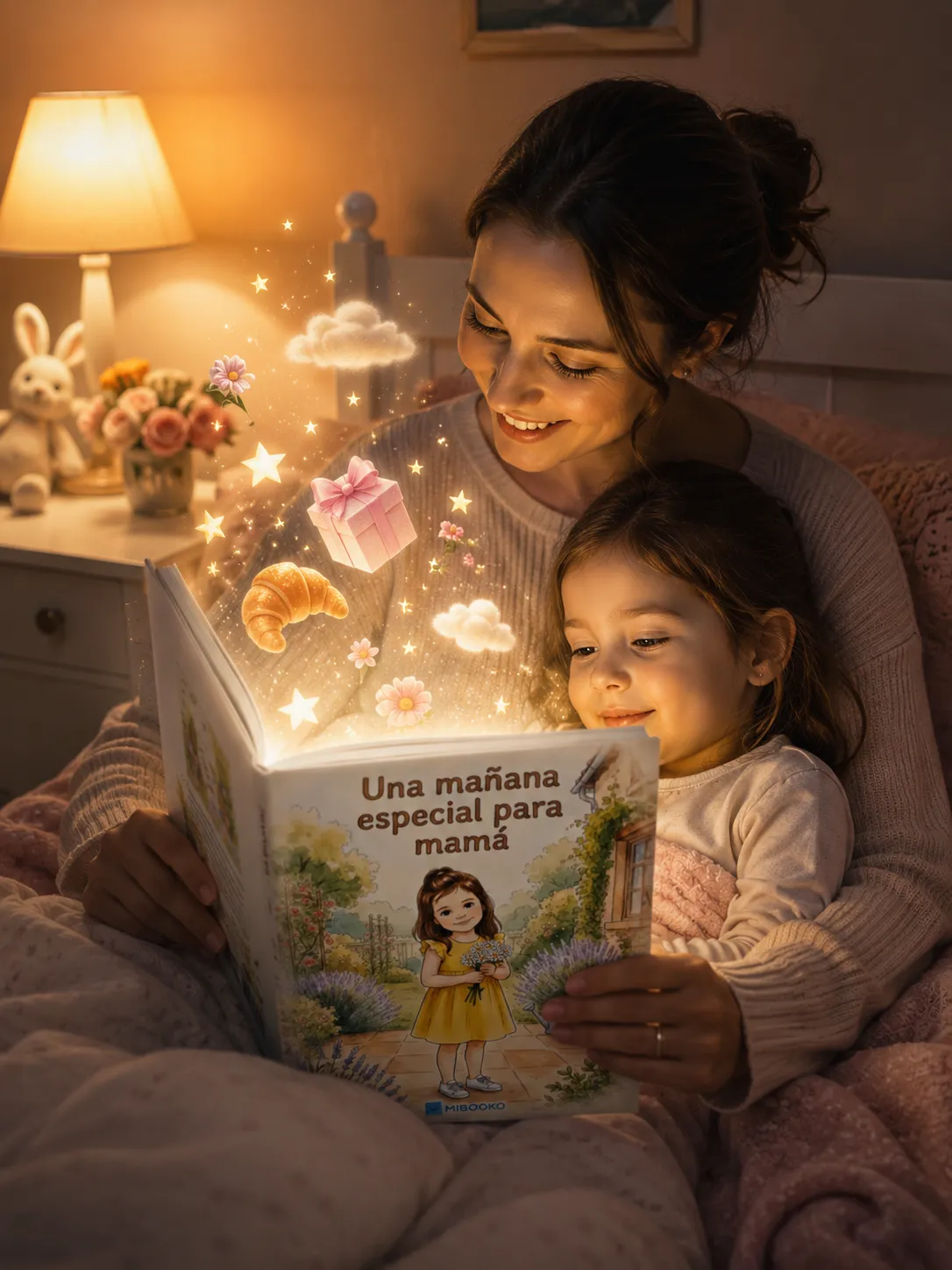
It can be.
A story does not stop being a book because technology helped create it. The real question is whether the final experience has the qualities parents expect from a children’s book.
It should have a clear story. It should feel suitable for the child. It should be pleasant to read aloud. It should have a visual and emotional identity. It should be something the child can return to.
MIBOOKO stories are designed to become reading experiences, not just generated text.
Depending on the selected product, families can receive digital, print, and audio formats. That makes the story easier to read together, gift, keep, or revisit. If you want a physical keepsake, explore printed personalized storybooks for kids.
Who are AI-assisted personalized storybooks best for?
MIBOOKO may be a good fit if you want:
- a story where your child becomes the hero
- personalization beyond a name
- a digital book ready quickly
- optional printed editions
- audio or parent voiceover options
- a meaningful gift for a child
- a bedtime, birthday, or confidence-building story
- a reading moment that feels personal
It may not be the right fit if you want an unlimited free-form writing tool, random prompts, or a chatbot-style experience for a child.
MIBOOKO is intentionally more structured than that.
Create a personalized storybook with MIBOOKO
You may have arrived here searching for AI storybooks for kids.
That makes sense. AI is changing how personalized stories can be created.
But the better question is not “Can AI write a story?”
The better question is:
Will this story feel safe, personal, meaningful, and worth reading with my child?
That is the question MIBOOKO is built around.
Create a personalized storybook where your child becomes the hero — with guided setup, privacy-friendly options, and formats made for real family reading.
Frequently asked questions about AI storybooks for kids
Are AI storybooks safe for kids?
AI storybooks can be safe when they are built with age-aware language, content boundaries, parent-guided personalization, and privacy-conscious design. Parents should be cautious with open-ended tools that do not clearly explain how children’s content is controlled.
Is MIBOOKO an AI storybook generator?
MIBOOKO uses guided technology to create personalized children’s books, but it is not a free-form AI story generator. The focus is on meaningful personalized stories, emotional connection, reading engagement, and family-friendly quality.
Does MIBOOKO require a child’s photo?
No. MIBOOKO can support photo-free personalization through avatar-style options for families who prefer not to upload a child’s photo.
What is the difference between an AI storybook and a personalized storybook?
An AI storybook describes the technology used to help create or adapt the story. A personalized storybook describes the experience: a story shaped around the child’s name, age, appearance, interests, and reading moment.
Can AI stories replace parents reading with children?
No. AI should not replace shared reading. The best use of AI-assisted personalization is to help create a story that parents and children can enjoy together.
Can I get a printed version of the story?
Yes. Depending on the selected product and format, MIBOOKO offers digital storybooks, printed editions, and audio options.
How fast is a MIBOOKO story ready?
Digital MIBOOKO storybooks are typically ready in about 60 minutes. Printed formats depend on production and delivery timing.
Are MIBOOKO stories suitable as gifts?
Yes. Personalized storybooks can work well as gifts because the child becomes the hero of the story. They can be used for birthdays, bedtime routines, family moments, special occasions, or confidence-building themes.