















Screen Time Storybook for Kids
A personalized story that helps your child use screens less and end screen time calmly. Small steps. Clear routines. Less conflict.
Gentle, age-appropriate, and made for read-together moments.
- Best for: too much screen time, “one more minute”, turn-off tears, bedtime delays, transition fights
- Best for ages 3-11+
-
Great moment: before bedtime, after school, before dinner, weekend mornings
This story helps children switch from screens to the next activity with less stress.
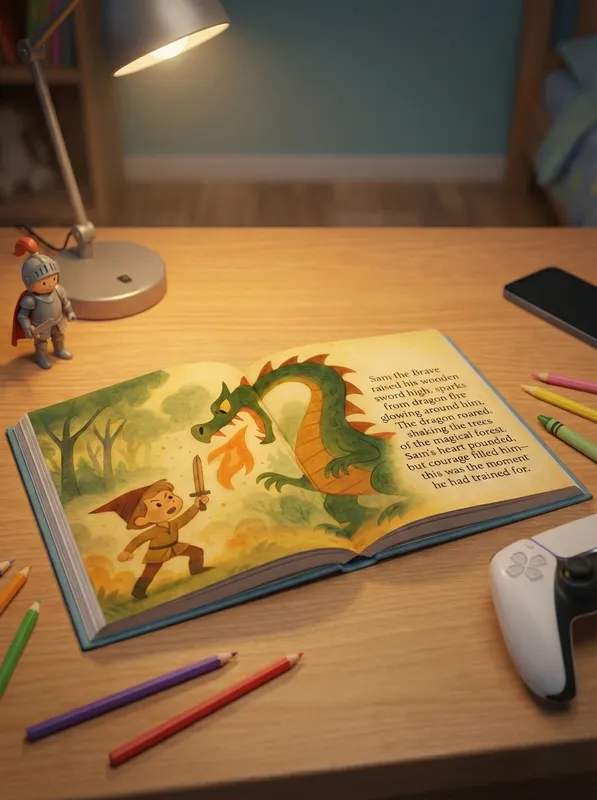
Signs your child may need this
You may find this story helpful if your child:
- Screen time takes over play, reading, or outdoor time
- Hard to stop even after a warning
- Mood drops when the device is removed
- Bedtime shifts later because of screens
- Gets upset when screen time ends
- Negotiates again and again
- Has trouble moving to the next activity
- Becomes more emotional after long screen sessions
- Delays bedtime because of a device
- Needs calm words for “stop now” moments
- Needs a predictable routine for transitions
What this story helps practice

This excessive screen time storybook helps your child practice:
Stopping on time with a clear routine
Shorter sessions (a simple start–end structure)
Powering down calmly and putting the device away
Switching to the next activity without arguing
Choosing alternatives (book, play, drawing, outdoor time)
Using simple words during transitions (“I feel upset. I can do the next step.”)
How personalization works
Children follow routines better when they feel familiar. You choose your child’s name and details, pick a theme your child loves, and select the screen time situation you want to practice. The story uses calm, age-appropriate language and read-together prompts. This helps you repeat the same short phrases in real life, during turn-off moments.
Learn more about our Methodology & Safety →
Example story moments
“The Kind Warning”
The hero gets a clear time notice before screen time ends.
“The Last Choice”
The hero chooses one small last action, then prepares to stop.
“Next Fun”
The hero powers down and moves to the next activity with support.
Read-together prompts
Ask your child:
What part was hardest for the hero when screen time ended?
What warning helped the hero get ready?
What was the hero’s last choice?
What did the hero do with the device after powering down?
What was the “next fun” activity?
What words did the hero use when feeling upset?
What can we choose as our next fun at home?
What would help you most at screen-off time?
Tiny parent tip:
Decide “next fun” before screen time starts. It reduces conflict later.
Tiny parent tip:
Keep your words short. Short words are easier when emotions are big.
Pair it with a theme they already love
A dinosaur adventure makes screen-off time feel like a fun mission. It helps your child follow the same calm steps each time.
A travel adventure adds curiosity and wonder. Your child “powers down” and continues the story on a trip to Australia—new animals, new places, and a calm routine.
Related skills & challenges
Self-Regulation & Focus
Because screen time transitions improve when children practice pausing and following steps.
Anxiety & Worries
Because calm routines help children feel safe during bedtime and change.
Back to Skills & Challenges Hub →
Designed with care
This story supports parent-first, age-appropriate routines. The goal is simple: calm words and small steps you can repeat at home.
Links:
FAQ
Why do screen time endings cause big emotions?
Screens can feel exciting and absorbing. Stopping can feel sudden to a child. Some children also feel tired or overstimulated after screens. This is normal. The goal is not “no feelings.” The goal is a calm routine that makes the ending predictable. This story models that routine in a friendly way.
What is the simplest screen time transition routine for families?
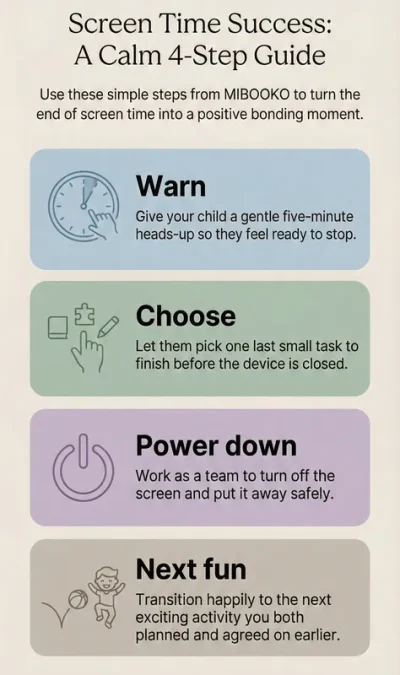
A simple routine has four steps: warn, choose, power down, next fun. First, give a clear time notice. Next, allow one small last choice. Then, close the device and put it away together. Finally, move to the next activity you agreed earlier. The story repeats this pattern so your child remembers it.
What if my child asks for “one more minute” again and again?
Use one clear rule and repeat it calmly. For example: “You can choose one last action, then we power down.” Do not keep negotiating. Negotiation creates hope for more time. The story helps because the hero follows one clear pattern. You can copy the same short phrase each time.
Can this story help when screens are used for learning or homework?
Yes. The goal is the same: a clear start and a clear end. You can use the story routine for the “end of learning time” as well. A warning and a last small step can reduce frustration. Then you move to the next planned activity. This keeps learning screens from turning into endless screens.
What should “next fun” be after screens?
Choose something simple and realistic. It can be a snack, a small game, drawing, bath time, or reading together. The best “next fun” is something your child likes and you can repeat often. If possible, let your child choose between two options before screen time starts. Choice reduces conflict.
What if different adults have different screen rules?
Try to agree on one simple routine, even if total screen time differs. Consistency helps children. You can share the same four steps with caregivers: warn, choose, power down, next fun. When a child sees the same routine, they feel safer. This story gives you a shared language that is easy to follow.
Ready for calmer screen time endings?
Create a personalized screen time storybook. Help your child power down calmly and move into routines with less conflict.
Browse all skills & challenges →