















Kindness and Empathy Storybook for Kids
A personalized story that helps your child notice feelings, choose kindness, and build warmer friendships—through gentle, everyday moments
Warm, age-appropriate, and made for read-together conversations.
- Best for: sharing, taking turns, “rough” play, sibling conflicts, friendship skills
- Best for ages 2-9
- Great moment: bedtime, after school, before playdates, or after a conflict
Kindness is a skill—children learn it best through gentle repetition.
Signs your child may need this
You may find this story helpful if your child:
Struggles to share or take turns
Gets carried away and forgets other people’s feelings
Has frequent sibling conflicts
Finds it hard to apologize or make amends
Says “they started it” and gets stuck there
Wants friends but doesn’t always know how to connect
Needs simple words for kindness in the moment
What this story helps practice
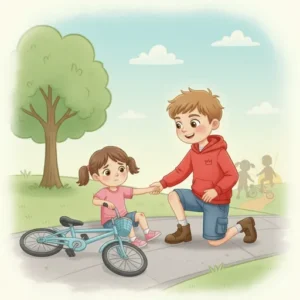
In a warm, child-as-hero way, your story helps your child practice:
Noticing feelings (their own and someone else’s)
Choosing kind actions in small, realistic ways
Repairing after an “oops” moment (not just “sorry”)
Friendship skills like taking turns, including others, and checking in
Confidence in kindness—so caring feels natural, not forced
How personalization works
Children engage more when the story feels like it belongs to them. You choose your child’s name and details, pick a theme they already love, and select a kindness focus—like sharing, welcoming someone new, sibling peace, or gentle words during conflict. The story is written in a calm, age-appropriate voice and includes simple read-together prompts so you can practice kindness language in everyday moments.
Learn more about our Methodology & Safety →
Example story moments
“The Feelings Clue”
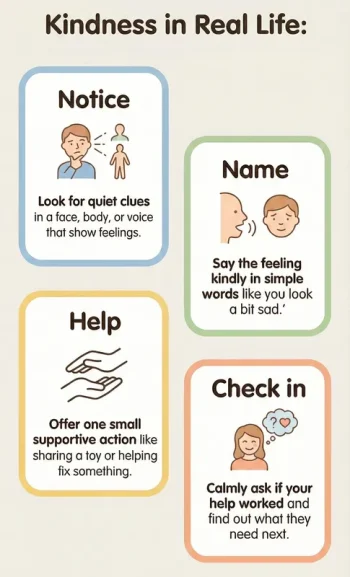
The hero notices a small clue—face, voice, or body language—and learns what it might mean.
“The Kind Choice”
The hero tries a simple kind action that fits the moment (helping, sharing, inviting, or listening).
“The Repair Mission”
When things go wrong, the hero makes it better with one small repair—and friendship feels safe again.
Read-together prompts
Ask your child:
How do you think the other character felt in that moment?
What was the “feelings clue” the hero noticed?
What would kindness look like right now—one small action?
If the hero made an “oops,” what could they do to repair it?
What words could the hero use that feel gentle and brave?
When did the hero include someone—and how did it change the scene?
What’s a kind choice you would like to try tomorrow?
If you were the hero’s helper, what would you remind them?
Tiny parent tip (callout):
When kids struggle with kindness, it’s usually a skills gap—not a character flaw.
Tiny parent tip (callout):
Praise specific kindness: “You noticed. You helped. You checked in.”
Pair it with a theme they already love
Animal characters make empathy feel easy and safe. Perfect for practicing caring, gentle choices, and friendship skills in a playful way.
Related skills & challenges
Bullying / Social Exclusion
Because kindness and empathy help children include others, speak up gently, and build safer friendships at school.
Honesty & Ethical Behavior
Because real kindness includes repair: telling the truth, taking responsibility, and making things better after an “oops.”
Back to Skills & Challenges Hub →
Designed with care
This story is built for parent-first, age-appropriate conversations. We use calm, respectful language and simple prompts that help children practice real-life kindness – without shame or lectures.
Links:
FAQ
What does a “kindness & empathy” storybook actually teach?
It teaches small, practical skills children can use in real moments—like noticing feelings, choosing gentle words, sharing, inviting someone to play, and making amends after a conflict. In the story, your child sees these skills modeled in a warm, encouraging way, then practices them with you through simple prompts. Over time, children often start borrowing the same language and choices at home, with siblings, and at school—because it feels familiar and safe.
My child is caring at home, but struggles with peers. Will this still help?
Yes! Many children are kind inside, but need help with friendship mechanics: how to join play, how to take turns, what to do when someone says “no,” and how to repair after an “oops.” A story gives your child a low-pressure way to rehearse these moments before they happen. You can pause, talk, and try different “kind choices,” which helps your child build confidence for real-life interactions.
Will this story shame my child if they’ve been unkind?
No. The tone stays supportive and respectful. The story focuses on growth: “we all have hard moments,” and “we can make it better.” Children learn best when they feel safe, so the story avoids labels and focuses on choices, feelings, and repair. That approach helps kindness feel like a skill your child can practice—not a test they can fail.
What if my child says “I don’t care” or laughs during serious moments?
That reaction can be a form of overwhelm, discomfort, or not knowing what to do next. A story helps because it creates a bit of distance: you can talk about the character’s feelings first, then gently connect it back to real life. Start small—one feelings clue, one kind action—and keep it light. Consistency matters more than intensity.
How often should we read it for the best results?
A few times a week is usually enough. Children learn through repetition, so re-reading can be helpful – especially before playdates or after school. You don’t need a long “lesson.” Even a 5-minute read with one or two prompts can reinforce the same kind language in a calm, everyday way.
What’s one simple phrase I can reuse at home?
It’s gentle, non-accusing, and it immediately builds empathy. Then you can follow with: “What’s one kind choice we can try now?” Over time, this two-step pattern becomes familiar and reduces conflict intensity.
Ready to grow kinder moments at home and at school?
Create a personalized story where your child practices noticing feelings, choosing kindness, and repairing after an “oops”—then use the prompts in everyday life.
Browse all skills & challenges →