















Bullying Storybook for Kids
A personalized story that helps your child handle bullying and social exclusion with calm words, safe choices, and confidence. Support for real school and play moments.
Gentle, age-appropriate, and made for read-together moments.
- Best for: teasing, name-calling, exclusion, mean jokes, “you can’t play” moments
- Best for ages 4-11+
- Builds confidence through small wins inside the story.
- Great moment: after school, before school, bedtime, before playdates
Bullying can make children feel small. This story helps them feel safer and more supported.
Signs your child may need this
This page may help if your child:
Does not want to go to school or activities
Says “Nobody likes me” or “I have no friends”
Becomes quiet, sad, or angry after school
Has sudden mood changes around peer situations
Talks about being left out or ignored
Gets upset during group play and then withdraws
Needs simple words to ask for help
What this story helps practice
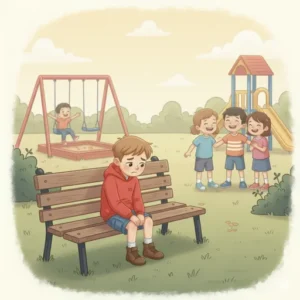
This bullying storybook for kids helps your child practice:
Naming what is happening (without blaming themselves)
Using one calm boundary sentence
Choosing safer friends and safer places
Walking away from unsafe play
Asking a trusted adult for help
Repairing confidence after a hard moment
How personalization works
Children respond better when the story feels familiar. You choose your child’s name and details, pick a theme your child likes, and select the situations that match your child’s world (school, playground, clubs, group play). The story uses calm language and read-together prompts. This helps you repeat the same short support phrases in real moments.
Learn more about our Methodology & Safety →
Example story moments
“Left Out Moment”
The hero is excluded or teased. The story names the feeling without shame.
“A Safe Response Plan”
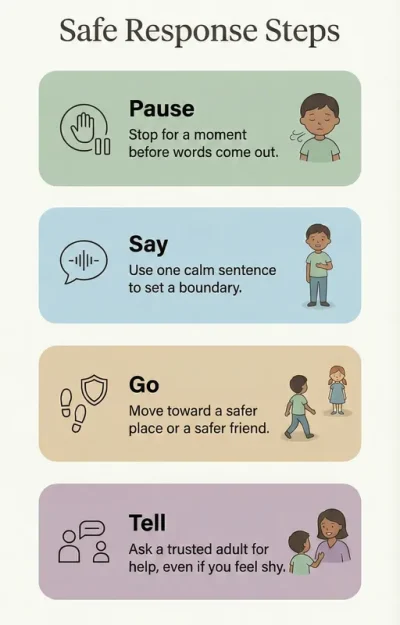
The hero practices one calm sentence and one safe choice.
“Belonging Again”
The hero finds a safer connection and feels stronger again.
Read-together prompts
Ask your child:
What happened to the hero?
How did the hero feel in the body?
What words could the hero say in a calm voice?
What is a safe place to go when play feels unsafe?
Who is a trusted adult the hero can tell?
What does a safe friend look like?
What can we do after a hard day to feel better?
What is one small plan for tomorrow?
Tiny parent tip:
Listen first. Then plan one small next step with your child.
Tiny parent tip:
Focus on safety. Do not push children to “fix it alone.”
Pair it with a theme they already love

A new place can make friendship skills easier to learn. The hero travels to Australia, meets new kids, and practices safe choices in a gentle way.
Related skills & challenges
Confidence & Potential
Because bullying can reduce confidence. Small steps help children feel strong again.
Back to Skills & Challenges Hub →
Designed with care
This story supports parent-first, age-appropriate coping. It is not medical advice. If bullying is ongoing, severe, or unsafe, seek help from the school or a qualified professional.
Links:
FAQ
Is this story for children who are bullied, or children who bully others?
It can support both situations. Some children are targeted. Some children copy unkind behavior. Some children switch roles depending on the group. This story teaches safe, respectful choices. It focuses on boundaries, asking for help, and building kinder connection. It does not shame the child. It guides the child to better actions.
What is one simple sentence my child can use when someone is mean?
Keep it short and calm. For example: “Stop. I don’t like that.”
If the child feels unsafe, the next step is not more talking. The next step is to move away and tell an adult. The story helps children practice this sequence in a safe way.
What if my child is excluded but there is no obvious bullying?
Exclusion can still hurt. Children may be ignored, not invited, or left out of games. The story can help your child name the feeling and choose a safer next action. It can also help you plan one small step, such as inviting one kind child to play, choosing a smaller group, or asking a teacher for support.
How do I talk about bullying without making it worse?
Start with listening. Use simple questions. Avoid long lectures. Ask what happened, who was there, and what the child wants to happen next. Then plan one small safety step. The story helps because it gives shared language. It lets you talk about the hero first, then connect to your child’s life.
Should I tell the school right away?
If there is repeated harm, threats, physical aggression, or a child feels unsafe, yes. Early action can prevent escalation. The story can support your child emotionally, but it should not replace adult protection. For many families, the best approach is: document what happened, contact the teacher, and agree on a clear safety plan.
What if my child becomes rude at home after being excluded?
That can be a stress response. Children often release feelings where they feel safest. First calm the body and reconnect. Then talk. The story supports this by normalizing big feelings and giving a simple plan: pause, calm words, safe next step.
Ready to help your child feel safer with peers?
Create a bullying storybook for kids that teaches calm words, safe choices, and confidence after hard social moments.
Browse all skills & challenges →