

























Vous avez décidé d'offrir un cadeau unique et merveilleux : un livre personnalisé qui place votre enfant au cœur de l'histoire. Mais voici le choix le plus important : quelle aventure vivra-t-il ? Choisir le bon thème est essentiel pour créer une histoire qui non seulement captivera votre enfant, mais qui sera aussi profondément personnelle et significative.
Un thème d'aventure idéal transforme un livre personnalisé, d'un simple objet ludique, en un précieux souvenir. Il doit refléter les passions actuelles de votre enfant, correspondre à son stade de développement et exprimer sa personnalité unique. Ce guide vous propose des conseils pratiques pour choisir un thème d'aventure qui permettra à votre enfant de se sentir compris, reconnu et véritablement héroïque.
Points clés à retenir
Adaptez le thème à l'âge : Choisissez des thèmes simples et familiers comme les animaux ou l'heure du coucher pour les tout-petits (2-3 ans), des concepts plus importants comme la magie ou les dinosaures pour les enfants d'âge préscolaire (4-5 ans) et des récits plus complexes impliquant le mystère ou l'amitié pour les jeunes lecteurs (6-8 ans).
Suivez leurs passions : l’aventure la plus captivante s’appuiera sur ce que votre enfant aime déjà, qu’il s’agisse d’espace, de nature, de sport ou d’art. Laissez ses centres d’intérêt du moment guider votre choix.
Tenez compte de sa personnalité : choisissez un thème qui corresponde au tempérament de votre enfant. Un enfant calme et doux appréciera peut-être une histoire sur la gentillesse et la créativité, tandis qu’un enfant énergique préférera une quête axée sur la résolution de problèmes.
Équilibre entre suspense et réconfort : une bonne aventure doit être palpitante sans être effrayante. Veillez à ce que les défis de l’histoire soient adaptés à l’âge et se terminent sur une note rassurante et empreinte de satisfaction.
Mettre l'accent sur l'héroïsme actif : les meilleurs thèmes permettent à l'enfant d'être un participant actif qui prend des décisions et résout des problèmes, plutôt qu'un simple observateur passif dont le nom figure dans l'histoire.
Table des matières
Adapter l'aventure à l'âge et au stade de développement de votre enfant
Comment adapter le thème à la personnalité unique de votre enfant
Adapter l'aventure à l'âge et au stade de développement de votre enfant
La compréhension du monde par un enfant évolue rapidement. L'aventure qui captive un enfant de six ans peut être déroutante pour un enfant de trois ans. Adapter le thème à son stade de développement garantit que l'histoire soit attrayante, compréhensible et émotionnellement appropriée.
Pour les jeunes enfants (2-3 ans) : des aventures simples, familières et sûres
À cet âge, le monde est un lieu nouveau et fascinant, mais le confort et la prévisibilité sont primordiaux. Les meilleurs récits d'aventure s'appuient sur des concepts familiers et une découverte en douceur.
- Animaux sympathiques : les histoires d’aide apportée à un chaton perdu ou de jeux avec des animaux de la ferme sont touchantes et réconfortantes.
Calme avant le coucher : Partir à la recherche de l’étoile la plus silencieuse ou dire bonne nuit à la lune peut favoriser une routine du coucher positive.
Découverte de la nature : une simple promenade dans un jardin ou une forêt à la découverte des couleurs, des sons et des textures est passionnante sans être surstimulante.
Pour les enfants d'âge préscolaire (4-5 ans) : Explorer des mondes plus vastes en toute confiance
Les enfants d'âge préscolaire ont une imagination débordante et un sens de l'indépendance grandissant. Ils sont prêts pour des aventures un peu plus grandes et plus fantastiques, mais toujours ancrées dans un sentiment de sécurité.
Magie et fantaisie : les thèmes impliquant des dragons amicaux, des forêts magiques ou l’apprentissage d’un pouvoir spécial peuvent parler directement à leur amour du jeu de l’imaginaire.
Dinosaures et espace : ces thèmes classiques offrent un cadre idéal pour des aventures axées sur la découverte, l’exploration et la curiosité.
Premières expériences : Une histoire centrée sur le premier jour d'école ou la rencontre d'un nouvel ami peut les aider à assimiler et à se préparer aux grandes étapes de la vie.
Pour les jeunes lecteurs (6-8 ans) : Problèmes complexes et développement du caractère
Les enfants plus âgés sont capables de suivre des intrigues plus complexes et commencent à comprendre des émotions nuancées. Ils apprécient les histoires aux problèmes clairs, aux solutions ingénieuses et qui procurent un sentiment d'accomplissement.
Mystère et résolution de problèmes : Un thème où l’enfant doit retrouver un objet perdu ou résoudre un mystère de quartier amusant peut stimuler ses capacités logiques en développement.
Amitié et travail d'équipe : les aventures qui nécessitent d'aider un ami ou de travailler avec d'autres pour atteindre un objectif peuvent renforcer d'importantes valeurs sociales.
Courage et résilience : les histoires de personnes ayant surmonté un défi, comme apprendre à faire du vélo ou essayer un nouveau sport, peuvent renforcer la confiance en soi.
Comment adapter le thème à la personnalité unique de votre enfant
Au-delà de l'âge, le tempérament de votre enfant est votre meilleur guide. Un thème bien choisi mettra en valeur sa personnalité et lui permettra de voir ses plus belles qualités reflétées dans le héros de son conte.
Pour l'explorateur curieux
Si votre enfant pose sans cesse des questions et adore explorer le jardin, choisissez un thème axé sur la découverte. Des aventures en pleine nature, dans l'espace ou même dans un musée sauront satisfaire sa curiosité. Le but du héros pourrait être d'identifier une nouvelle planète, de cartographier un sentier caché ou de percer le secret d'un fossile ancien. ( Favorise un développement cérébral sain )
Pour le doux rêveur
Pour un enfant qui aime dessiner, créer et prendre soin des autres, un thème axé sur la créativité, la gentillesse ou l'amitié est idéal. Pensez à des histoires comme celle de peindre un arc-en-ciel dans le ciel, d'aider des animaux en détresse ou d'organiser une fête spéciale pour un ami. Ces récits valorisent sa nature douce et empathique.
Pour le héros plein d'action
Votre enfant adore courir, construire et relever de grands défis ? Privilégiez les histoires dynamiques qui l'aident à résoudre des problèmes. Les aventures comme la construction d'une cabane fantastique, la victoire à une course amicale ou l'exploration courageuse de la jungle peuvent canaliser son énergie de manière positive et enrichissante. Ces histoires lui montrent que son audace est une force. Pour les enfants plus réservés, une histoire peut offrir un espace sécurisant pour explorer le courage. Un livre personnalisé, choisi avec soin, peut aider un enfant timide à développer sa confiance en lui.
Choisir un thème pour soutenir des objectifs émotionnels
Les livres personnalisés pour enfants peuvent être bien plus qu'un simple divertissement ; ils peuvent être de précieux outils pour aborder les défis et les étapes importantes de la vie. En choisissant un thème qui reflète une situation réelle, vous créez un espace sécurisant propice à la conversation et à l'épanouissement émotionnel.
Développer le courage et la résilience
Si votre enfant éprouve une peur courante, comme la peur du noir, des orages ou des nouvelles rencontres, une histoire d'aventure peut l'aider à développer son courage. Une histoire où il incarne le héros et apprend à se lier d'amitié avec un nuage d'orage bruyant mais bienveillant, ou à trouver une lueur d'espoir dans l'obscurité, peut être incroyablement valorisante. (Développe les compétences linguistiques, le vocabulaire et les connaissances générales.)
S'orienter vers de nouvelles expériences
Les grands changements de vie peuvent être intimidants pour les tout-petits. Un livre personnalisé sur le thème de l'arrivée d'un petit frère ou d'une petite sœur, d'un déménagement ou de la rentrée scolaire peut les aider à se sentir préparés et optimistes. L'histoire peut présenter cette nouvelle expérience comme une aventure passionnante où ils jouent un rôle important et utile.
Encourager la bienveillance et l'empathie
Les thèmes axés sur l'entraide peuvent renforcer les comportements prosociaux. Qu'il s'agisse de partager un jouet précieux, de réconforter un ami triste ou de prendre soin d'un animal de compagnie, l'histoire illustre la compassion de manière personnelle et mémorable. Grâce aux histoires personnalisées, vous pouvez explorer divers récits conçus pour développer des compétences et relever des défis spécifiques.
Pièges courants à éviter lors du choix d'un thème
Choisir un thème est un processus passionnant, mais quelques erreurs courantes peuvent empêcher l'histoire de vraiment toucher votre enfant. Voici ce à quoi il faut faire attention.
Erreur n° 1 : Choisir un thème que les parents aiment. Vous adorez peut-être les contes de fées classiques, mais si votre enfant est actuellement passionné par les engins de chantier, une histoire sur un bal royal risque de ne pas l’intéresser. Laissez-vous guider par les véritables passions de votre enfant.
Erreur #2 : Négliger le facteur peur. Une aventure a besoin de défis, mais un méchant ou une situation trop menaçante peut engendrer de l’anxiété. Assurez-vous que le conflit soit adapté à l’âge : pensez à un renard espiègle, pas à un monstre terrifiant.
Erreur #3 : Choisir un thème trop complexe. Évitez les histoires avec trop de personnages, des passés compliqués ou des dilemmes moraux abstraits pour les jeunes enfants. L’intrigue doit être claire et l’objectif du héros facile à comprendre.
Rendre l'aventure personnelle et relire
La magie d'un livre personnalisé réside dans sa capacité à faire de votre enfant un véritable héros. Il ne s'agit pas simplement d'y inclure son nom ; il s'agit de la façon dont le thème et le récit lui donnent confiance en lui.
L'enfant comme héros actif, et non comme observateur passif
Recherchez des histoires où l'enfant fait des choix, résout des problèmes et fait progresser l'intrigue. Plutôt qu'une histoire où les événements lui arrivent passivement, choisissez-en une où il décide activement de gravir la montagne, de déchiffrer l'énigme ou d'aider le personnage en difficulté. Ce sentiment d'autonomie l'incitera à relire l'histoire encore et encore.
Comment la personnalisation sans photo stimule l'imagination
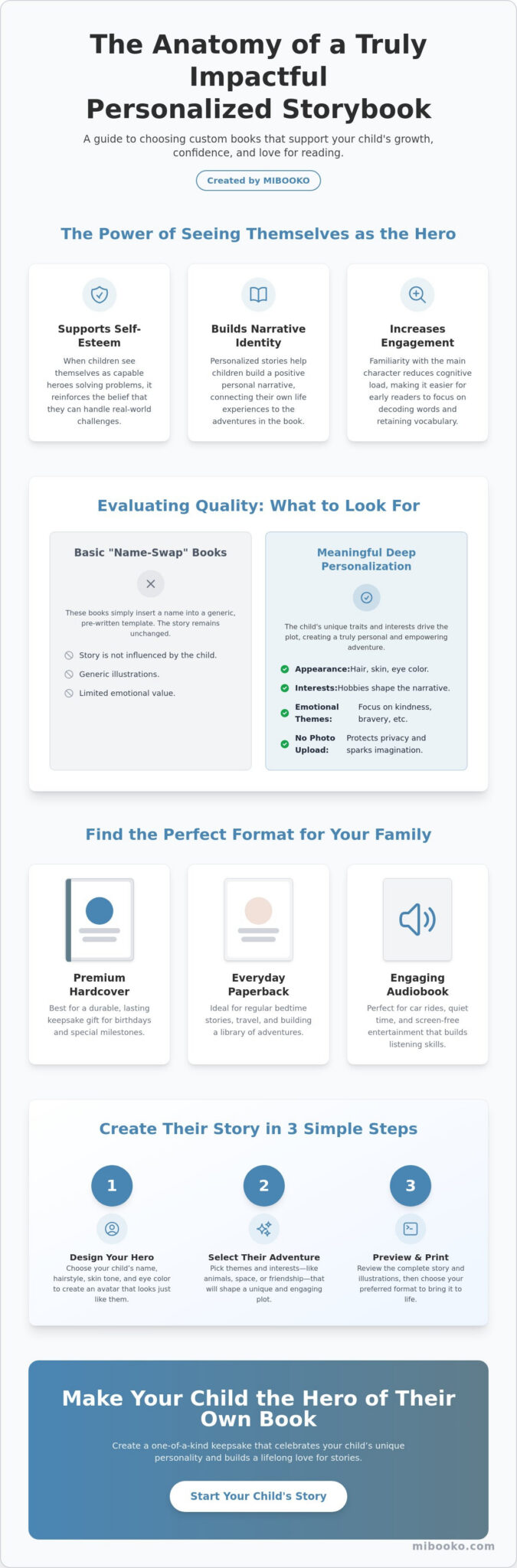
Un thème d'aventure captivante permet à l'enfant de s'imaginer dans n'importe quel univers. Plutôt que d'utiliser une photo, MIBOOKO crée un personnage illustré inspiré de détails physiques précis, comme la couleur des cheveux et du teint, ainsi que d'autres traits visuels. Cette représentation artistique stimule l'imagination et permet à l'enfant de se croire astronaute, artiste magicien ou explorateur de la forêt. Cette approche préserve également l'intimité de votre famille. Un livre personnalisé sans photo rend l'histoire à la fois personnelle et universellement aventureuse.
En choisissant avec soin un thème d'aventure adapté à l'âge, à la personnalité et aux centres d'intérêt de votre enfant, vous créez bien plus qu'un simple livre. Vous créez une histoire personnelle, riche de sens, que l'on a envie de relire en famille. Prêt à trouver le voyage idéal pour votre petit héros ?
Créez dès aujourd'hui un livre d'histoires personnalisé pour votre enfant et regardez-le devenir le héros de sa propre aventure extraordinaire.
Foire aux questions
Comment savoir si un thème d'aventure est trop effrayant pour mon enfant ?
Recherchez des descriptions d'histoires qui mettent l'accent sur des défis amicaux ou des problèmes amusants. En règle générale, assurez-vous que le conflit principal puisse être résolu par l'ingéniosité, la bienveillance ou le travail d'équipe plutôt que par la confrontation. Si votre enfant est particulièrement sensible, privilégiez les thèmes axés sur la créativité, l'amitié ou la découverte en douceur.
Et si les intérêts de mon enfant changent rapidement ?
Privilégiez des thèmes d'aventure plus vastes et intemporels plutôt que des personnages spécifiques d'une série télévisée. Des thèmes comme l'exploration de la nature, l'amitié, l'espace ou la magie exercent un attrait durable. Ainsi, même si leur personnage préféré change le mois prochain, l'aventure principale restera passionnante.
Puis-je choisir un thème pour faciliter un comportement spécifique, comme le partage ?
Oui, absolument. Une histoire où votre enfant est le héros qui découvre la joie de partager un objet précieux avec un ami peut être un outil puissant et positif. Elle illustre le comportement souhaité dans un contexte personnel et bienveillant, ouvrant ainsi la voie à des conversations concrètes.
Le personnage principal doit-il toujours être un héros courageux et extraverti ?
Absolument pas. Le héros de l'histoire doit ressembler à votre enfant. On peut par exemple raconter l'histoire d'un héros discret et réfléchi qui résout un problème grâce à sa créativité, ou d'un héros bienveillant qui sauve la situation par son empathie. L'important est de mettre en valeur les forces uniques de votre enfant, quelles qu'elles soient.
Comment les livres personnalisés pour enfants abordent-ils des thèmes comme la diversité et l'inclusion ?
Les plateformes modernes de livres personnalisés privilégient souvent les récits inclusifs. En permettant aux parents de choisir les détails physiques d'un personnage illustré, elles contribuent à ce que davantage d'enfants s'identifient à un héros qui leur est familier. Les thèmes abordés mettent souvent en avant des valeurs universelles telles que la bienveillance, l'amitié et l'esprit communautaire, qui trouvent un écho dans différentes cultures.