


















Research-Informed Stories for Children
MIBOOKO is shaped by published work in child development, reading engagement, shared storytelling, and educational technology.
This page explains the ideas and evidence that inform our thinking.
If you want to see how MIBOOKO applies these ideas in practice — including quality guardrails, privacy choices, and content boundaries – visit our Methodology & Safety page.

Why Research Matters in Personalized Children’s Books
Stories can support far more than entertainment. They can help children feel seen, stay engaged, explore emotions, and enjoy meaningful reading time with a parent or caregiver.
Personalization can strengthen that effect by making the story feel more relevant to the child’s world. When children recognize familiar details – such as their name, appearance choices, or family context – reading may feel more immediate, more motivating, and more emotionally engaging.
At MIBOOKO, we use these insights to shape story frameworks, emotional pacing, and reading experiences that feel warm, personal, and developmentally thoughtful.
What “Research-Informed” Means at MIBOOKO
For MIBOOKO, research-informed does not mean making exaggerated promises or presenting storytelling as therapy. It means using published work, expert thinking, and consultation to shape how stories are designed.
This includes:
how story arcs are structured
how emotional themes are framed
how language, pacing, and intensity are kept age-aware
how personalization is used to increase relevance without becoming chaotic or manipulative
how parent-child reading moments remain central to the experience
Our goal is not to overstate science.
Our goal is to use it responsibly to make better children’s books.

“Personalization transforms storytelling from entertainment into a developmental catalyst.”
The Strategic Role of Hyperpersonalized Narratives in Cultivating Child Success and Well-being, 2025
The Three Pillars of MIBOOKO’s Developmental Design
1️⃣ Identity, Confidence, and Emotional Connection
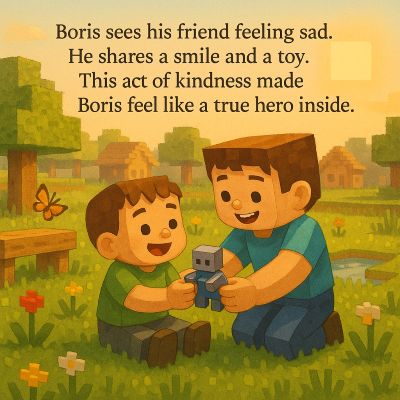
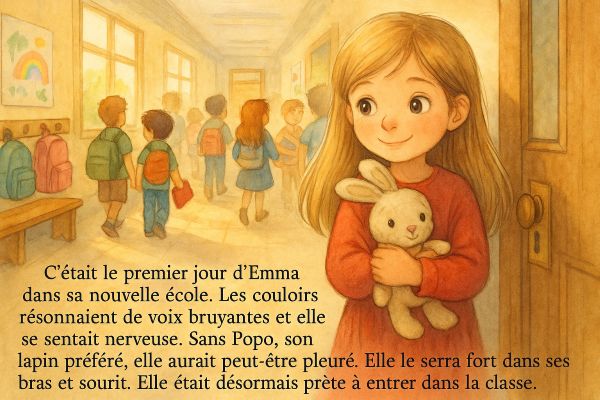
When children see themselves reflected in a story, the reading experience can feel more personal and emotionally meaningful. A familiar name, appearance, or family setting can strengthen attention and make the child feel more connected to the story world.
This is one reason personalized books often feel different from generic stories: the child is not only following the hero, but experiencing the journey from a more personal point of view.
2️⃣ Reading Enjoyment, Attention, and Recall
Children are more likely to stay with a story when it feels accessible, relevant, and enjoyable. Personalization can support focus by making details feel familiar and easier to care about.
At MIBOOKO, we treat reading enjoyment as a serious design goal. When a child wants to return to a book, that repeated engagement can create better conditions for attention, language exposure, and stronger reading routines.
3️⃣ Parent–Child Bonding Through Shared Reading
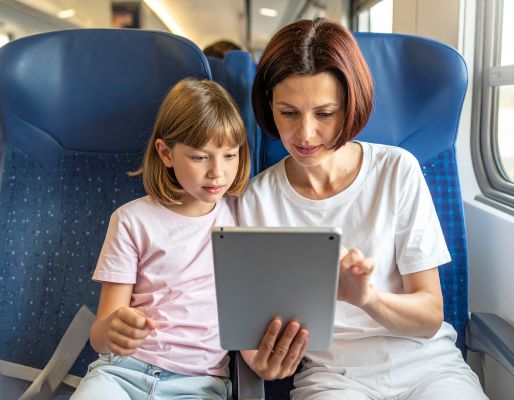
For many families, the real value of a storybook is not only what the child reads, but what happens around the reading. Shared reading can create moments of closeness, conversation, laughter, reassurance, and reflection.
Personalized stories can make those moments feel even more natural by giving parent and child something that already feels familiar, relevant, and worth talking about together.
What Educators and Psychologists Are Saying
The broader fields of child development, literacy, and educational media increasingly recognize that quality, relevance, and emotional engagement matter in children’s reading experiences.
This section highlights selected voices, publications, and public-facing research references that are relevant to personalized storytelling, reading motivation, child engagement, and developmentally thoughtful media.
Important clarification:
Researchers, institutions, and publications cited here are referenced because their published work or public commentary is relevant to this area. They are not affiliated with MIBOOKO, did not review MIBOOKO products, and do not endorse MIBOOKO unless explicitly stated otherwise.
What Global Child-Development Researches Say
Across literacy, developmental psychology, bibliotherapy, and educational media research, several themes appear consistently: children benefit from reading experiences that feel engaging, emotionally safe, socially meaningful, and connected to real interaction with adults.
The studies and frameworks below do not “prove” any one product. They show why personalization, shared reading, and thoughtful story design deserve to be taken seriously.
The National Literacy Trust (UK)
Reading enjoyment is a stronger predictor of success than socio-economic status.
Parent-Child Engagement Studies
Personalization doubles verbal interaction during shared reading.
Educational Psychology Research
Hyperpersonalized stories improve comprehension by 30%.
Bibliotherapy Frameworks
Personalized narratives help children safely explore and resolve fears.
How This Research Informs MIBOOKO
MIBOOKO uses this body of thinking to shape story design at the framework level.
That includes:
age-aware story structure
child-friendly emotional pacing
themes such as confidence, calm, empathy, friendship, and everyday challenges
personalization that supports connection rather than confusion
reading experiences designed for both child enjoyment and family use
If you want to understand how those principles are applied in practice — including safety boundaries, privacy choices, and quality methodology — visit Methodology & Safety.
MIBOOKO Research Notes and Internal Publications
From time to time, MIBOOKO publishes internal research notes and synthesis documents that explain the thinking behind our approach to personalized stories for children.
These materials are intended to show how we interpret the broader field and how we translate relevant ideas into product design. They are not independent peer-reviewed validation of MIBOOKO.
MIBOOKO Research: The Mirror Effect – The Science of Self-Relevance in Children’s Narrative Development (2026 Edition)
[Download PDF]
MIBOOKO Research: The Strategic Role of Hyperpersonalized Narratives in Child Development (2025 Edition)
[Download PDF]
What This Page Does Not Claim
This page explains the published research and expert thinking that inform MIBOOKO’s approach.
It does not mean that:
MIBOOKO is clinically proven
every child will experience the same outcome
storybooks can replace professional support
every individual book is manually reviewed one by one before delivery
cited researchers are affiliated with or endorsing MIBOOKO unless explicitly stated
This distinction matters because we want our language to remain accurate, careful, and trustworthy.
FAQ
IBOOKO’s emphasis on “Science + Storytelling” is foundational because research confirms that the quality of media, not the quantity of screen time, determines the impact on children’s learning outcomes. Many commercially produced digital books and apps are known to be of low educational value, lack clear learning goals, and contain distracting features. Such unspecified or generic content has shown a near-zero or non-significant association with children’s vocabulary acquisition in naturalistic settings.
To mitigate these risks, MIBOOKO adopts a quality-first approach:
Purposeful Design: Content is explicitly guided by pedagogical insights and focused on three pillars: Empathy & Self-esteem, Early Literacy & Focus, and Parent-Child Bonding. This design contrasts with generic entertainment, which often yields minimal learning effects.
* Human-Augmented AI: The platform avoids generating stories “from scratch” using only AI; instead, AI acts as an augmentation tool to scale personalization within narrative frameworks defined by humans. This structured process ensures author-level quality.
* Congruency: High-quality design requires that multimedia and interactive features are congruent with the story, supporting the narrative rather than distracting from it. Distracting features consume cognitive resources needed for comprehension.
Storybook reading is a critical activity for cultivating empathy, a trait highly valued by parents (alongside honesty and self-regulation). Stories systematically support four key empathy-related skills: perspective-taking, theory of mind, emotional vocabulary/understanding, and prosocial behavior.