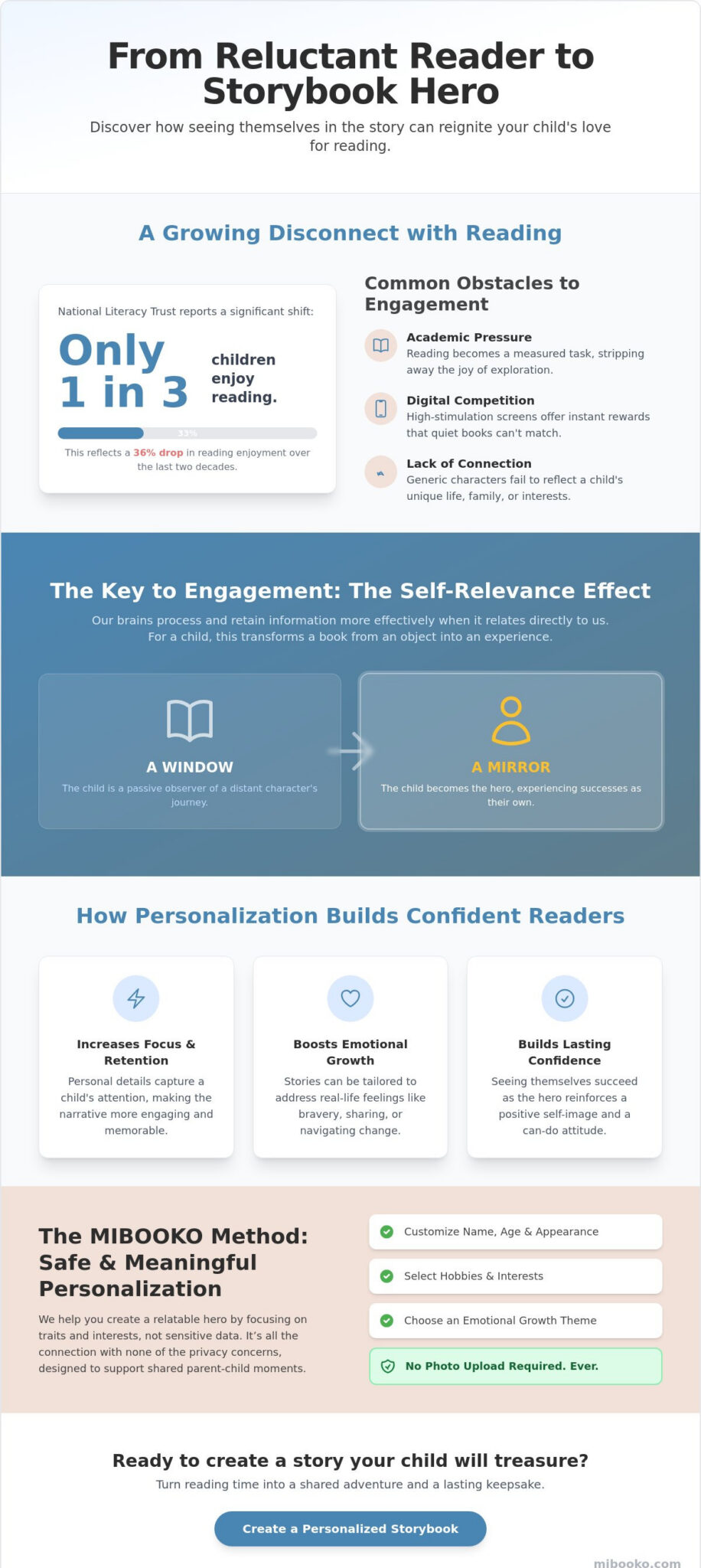
על פי הקרן הלאומית לאוריינות, רק אחד מכל שלושה ילדים נהנה כיום לקרוא בזמנו הפנוי, ירידה של 36% בשני העשורים האחרונים. זהו מאבק שקט שעמו מתמודדים הורים רבים, לראות ספרים יפים אוספים אבק בעוד המסכים תופסים את מרכז הבמה. אתם רוצים שילדכם יחווה את הפלא של סיפור נהדר, אך למצוא איך לגרום לילד שלי להתלהב מקריאה מרגיש לעתים קרובות כמו מאבק קשה. טבעי לחלוטין להרגיש מודאג כאשר קריאה מתחילה להרגיש כמו מטלה ולא כמו בחירה.
החדשות הטובות הן שמעורבות מתחילה כאשר ילד מפסיק לראות ספר כחלון לעולמו של מישהו אחר ומתחיל לראות אותו כמראה של עצמו. אנו מבטיחים להראות לכם שיטות מעשיות, מבוססות מחקר, להפוך את הקריאה להרפתקה מותאמת אישית שבונה אוצר מילים וביטחון מתמשך. מדריך זה בוחן שבע אסטרטגיות פשוטות שיעזרו לילדכם למצוא שמחה בכל עמוד, כולל כיצד הפיכתו לגיבור הנרטיב יכולה לשנות את מערכת היחסים שלו עם ספרים לנצח.
במאמר זה:
- למדו להבחין בין שלב טיפוסי של קריאה מהוססת לבין השפעת הלחץ האקדמי על המוטיבציה של ילדכם.
- גלו כיצד לעורר התלהבות בילדי מקריאה באמצעות אפקט הרלוונטיות העצמית, שעוזר לילדים להתמקד כשהם רואים את עצמם בסיפור.
- מצאו את האיזון הטוב ביותר בין פורמטים מודפסים, דיגיטליים ואודיו כדי לתמוך בצרכים החושיים ובכישורי ההאזנה של ילדכם.
- גלו חמישה הרגלים קלים, כמו קריאה מונחית בחירה, שמשלבים סיפור סיפורים בשגרת יומכם ללא לחץ.
- להבין כיצד סיפורים מותאמים אישית משמשים ככלי התפתחותי לבניית הצמיחה הרגשית והביטחון הפנימי של ילדכם.
מדוע ילדים מאבדים עניין בקריאה וכיצד לזהות את הסימנים
הבנת הסיבות לכך שילד נמנע מספרים היא הצעד הראשון בלמידה כיצד לעורר התלהבות בילד מקריאה. לעתים קרובות, זה לא חוסר עניין בסיפורים, אלא ניתוק מהמדיום. חלק מהילדים נכנסים לשלב של "קריאה מהוססת" משום שהם החלו לקשר ספרים עם מטלות בית ספר ומבחנים מלחיצים. כאשר קריאה הופכת למשימה שיש למדוד ולא לעולם שיש לחקור, הסקרנות הטבעית של מוח צעיר יכולה להתחיל להתלקח.
כמו כן, חיוני להבחין בין ירידה זמנית במוטיבציה לבין אתגר למידה אמיתי. בעוד שקורא בעל נטייה לקריאה עלול להימנע מספרים משום שהוא מוצא את הנושאים חסרי השראה, ילד עם אתגר למידה עלול להתקשות בתהליך הקריאה עצמו, כגון פענוח צלילים או שמירה על ריכוז. על ידי התבוננות האם ילדכם מתקשה עם המכניקה או פשוט עם המוטיבציה, תוכלו להתאים את התמיכה שלכם לצרכיו הספציפיים מבלי להוסיף לחץ מיותר ליומו.
לתחרות דיגיטלית תפקיד משמעותי בשינוי הזה. בעולם של משוב מיידי ואנימציות בהירות, הקצב השקט והיציב של ספר יכול להרגיש איטי. זה לא כשל בדמיונו של ילדכם; זהו שינוי באופן שבו המוח שלו מעבד תגמולים נרטיביים. כאשר ספרים מסתמכים על טרופים גנריים וחוזרים על עצמם שאינם משקפים את חייו או את תחומי העניין הייחודיים של הילד, הם לעתים קרובות בוחרים בחלופה בעלת הגירוי הגבוה. הם רוצים לראות את עצמם בתוך הפעולה, לא רק לצפות בדמות רחוקה שהם לא יכולים להזדהות איתה.
מכשולים נפוצים למעורבות בקריאה
מספר מכשולים עלולים לגרום למעבר לקריאה עצמאית להרגיש מרתיע. פערים באוצר מילים הם גורם תכוף. אם סיפור דורש מילד "לתרגם" ללא הרף מילים לא מוכרות, הוא מאבד את החוט הרגשי של הנרטיב. בנוסף, ספרי מיינסטרים רבים חסרים ייצוג שמהדהד עם הזהות, תחומי העניין או המבנה המשפחתי הספציפי של הילד. חוסר קשר זה מקשה עליהם לראות את עצמם כגיבור. לבסוף, הקפיצה מספרים כבדי תמונות לפרקים צפופי טקסט יכולה להרגיש כמו חומה בלתי ניתנת לגישור ללא הגשר הנכון שישמור על מעורבותו.
איתור רגע ה"אהה!" להתערבות
ניתן לזהות היכן ילדכם זקוק לעזרה על ידי צפייה באופן שבו הוא מתקשר עם מדף הספרים שלו. האם הוא באמת סופג את הסיפור, או סתם מעיין בכריכות כדי להעביר את הזמן? השתמשו בתצפית בלחץ נמוך כדי לראות אילו נושאים באמת מעוררים שאלה או חיוך. אימות התסכול שלהם הוא כלי רב עוצמה לחיבור. באמירה, "אני יודע שבדף הזה יש הרבה מילים גדולות, בואו נתמודד עם זה יחד", אתם יוצרים מרחב רגשי בטוח. גישה תומכת זו היא חלק מרכזי במתודולוגיית MIBOOKO , שבה אנו נותנים עדיפות לנקודת המבט של הילד כדי לעזור לבנות מחדש את ביטחונו כקורא.
כוחה של הרלוונטיות העצמית: הפיכת ילדכם לגיבור
האם שמתם לב פעם איך עיניו של ילדכם נדלקות כשהוא שומע את שמו בשיחה? זה לא רק רגע מתוק; זוהי תופעה פסיכולוגית המכונה אפקט הרלוונטיות העצמית. מחקרים מצביעים על כך שאנו מעבדים ושומרים מידע בצורה יעילה יותר כאשר הוא קשור ישירות לעצמנו. יישום מושג זה הוא אסטרטגיה רבת עוצמה כשאתם מחפשים כיצד לעורר התלהבות אצל ילדכם מקריאה . כאשר ילד רואה את שמו ודמות שנראית כמוהו על הדף, הסיפור מפסיק להיות מושג מופשט והופך למשימה אישית.
התאמה אישית הולכת הרבה יותר עמוקה מאשר רק שינוי שם. זה מגביר את המיקוד של הילד מכיוון שהוא כבר לא רק צופה פסיבי. הוא הגיבור. שינוי פרספקטיבה זה יכול לעזור לבנות ביטחון בגיל הרך, שכן הילד "חווה" את הצלחות הדמות כאילו היו שלו. בעוד שטיפים רבים לקוראים מהססים מציעים למצוא ספרים על תחביביו של הילד, מעורבות אמיתית נובעת לעתים קרובות מהתייחסות לנוף הרגשי הספציפי שלו. הכללת נושאים כמו "ללמוד להיות אמיץ" או "לשתף עם אח חדש" מאפשרת לילד לנווט באתגרים מהעולם האמיתי במסגרת הבטיחות של ספר סיפורים.
התאמה אישית ללא חששות בנוגע לפרטיות
הורים רבים מודאגים לגבי בטיחות דיגיטלית כאשר הם בוחנים ספרים בהתאמה אישית. אין צורך להעלות תמונה של ילד כדי ליצור קשר אינטימי. התאמה אישית מודרנית מאפשרת להתאים אישית את צבע השיער, גוון העור ותחומי העניין כדי ליצור אווטאר גיבור שניתן להזדהות איתו מבלי לשתף נתונים ביומטריים רגישים. גישה זו מבטיחה שהנרטיב יישאר מתאים לגיל ובטוח. על ידי התמקדות בתכונות מוכרות אלו, תוכלו להפוך את ילדכם לגיבור הספר שלו תוך שמירה על שקט נפשי מוחלט בנוגע לפרטיותו.
תיאוריית "המראה והחלון" באוריינות
מומחי אוריינות דנים לעתים קרובות בתיאוריית "המראה והחלון". רעיון זה מציע שספרים צריכים לשמש גם כמראה, שבה ילדים רואים את חייהם משתקפים, וגם כחלון, שבו הם מציצים לחייהם של אחרים. קוראים מהססים מתקשים לעתים קרובות משום שנתקלו ביותר מדי חלונות ולא מספיק מראות. הם לא רואים את עצמם מיוצגים בסיפורים שאומרים להם לקרוא. על ידי מתן רגעי "מראה" נוספים באמצעות סיפור סיפורים אישי, אתם מזמינים אותם לחזור לעולם הספרים. אתם יכולים לחקור את המדע שמאחורי גישה זו בדף המחקר של MIBOOKO , המפרט כיצד נרטיבים רלוונטיים לעצמם תומכים בהתפתחות קוגניטיבית ובמעורבות ארוכת טווח.
Every child has a unique learning style. Some are drawn to the vibrant glow of a tablet, while others find comfort in the tactile rustle of paper. When you’re exploring how to get my child excited about reading, it’s helpful to remember that the format can be just as important as the story itself. By offering a variety of ways to experience a narrative, you create a multi-sensory environment that meets your child exactly where they are. This flexibility reduces the pressure to “perform” and allows the joy of the story to take the lead.
Physical books remain a gold standard for a reason. They provide a sensory anchor during bedtime bonding, where the weight of the book and the act of turning pages create a focused, shared experience. However, don’t overlook the power of digital and audio options. If your child is highly motivated by technology, a digital storybook can serve as a friendly bridge from games to literature. The key is to use these tools as a way to build a “story muscle” that eventually leads them back to the printed page.
Audiobooks are often the missing link in a child’s literacy journey. They act as a gateway to physical reading by developing listening comprehension and vocabulary before a child has mastered decoding text. When a child hears a story, they can enjoy complex plots and rich language that might be slightly beyond their current reading level. This builds their appetite for narrative, making them much more likely to pick up a physical book to revisit characters they’ve already grown to love through their headphones.
The Case for Premium Hardcover Keepsakes
The physical quality of a book signals its value to a child. A sturdy, premium hardcover feels like a gift rather than a school assignment. These formats offer longevity that digital versions can’t match, surviving years of repeated readings and late-night cuddles. You can encourage a sense of ownership by creating a “special shelf” in their room. When a child sees their library growing, they begin to view themselves as a “reader,” which is a vital shift in their identity and confidence.
Audiobooks as an Inclusion Tool
For children who navigate dyslexia or processing delays, audiobooks remove the stress of translating symbols into sounds. They allow the child to focus entirely on the emotional arc of the story. Using MIBOOKO audiobooks provides a screen-free entertainment alternative during solo play or long car rides. Since these stories are personalized, the child hears their own name as the hero, which deepens their engagement and makes the listening experience feel intimately connected to their own life and imagination.
5 הרגלים יומיומיים לטיפוח אהבה לכל החיים לסיפורים
שילוב קריאה ביום המשפחה לא אמור להרגיש כמו הוספת משימה נוספת לרשימת בדיקה עמוסה ממילא. כאשר הורים שואלים כיצד לעורר התלהבות בילדיהם מקריאה, התשובה טמונה לעתים קרובות במקצבים הקטנים והעקביים של חיי היומיום. על ידי העברת המיקוד מהישגים אקדמיים להנאה משותפת, אתם מסירים את הלחץ שלעתים קרובות גורם לילדים להימנע מספרים. הרגלים אלה נועדו להיות עדינים, דלים במאמץ וממוקדים עמוקות בקשר הרגשי ביניכם לבין הקורא הצעיר שלכם.
נסו ליצור טקס קריאה שאינו קשור אך ורק לשעת השינה. בעוד שסיפורי ערב הם מסורת קלאסית, חלק מהילדים מתחילים לקשר אותם לשעמום של להירגע לקראת השינה. במקום זאת, נסו מפגש "סיפורים וחטיפים" אחרי בית הספר או פרק שקט במהלך ארוחת הבוקר. שלבו זאת עם קריאה מונחית בחירה על ידי מתן המילה האחרונה לילדכם לגבי איזה ספר אתם פותחים. פעולה פשוטה זו של סוכנות הופכת את הקריאה לזכות שבחרו ולא לדרישה שאתם הקציתם.
הסביבה הפיזית משחקת תפקיד משמעותי באופן שבו ילד תופס ספרים. צרו "פינת סיפור" נטולת מסכים, נוחה פיזית, אולי עם כריות רכות ומנורה ייעודית, כדי לגרום למרחב להרגיש מזמין. חיוני גם להדגים את ההתנהגות שאתם רוצים לראות. תנו לילדכם לתפוס אתכם נהנים מהספר או המגזין שלכם - אולי חוקרים את הסיפורת הגותית האטמוספירית של "עולם הזוועות" מאת גרהם מולווין . כשהם רואים אתכם מקבלים עדיפות בסיפור, הם מפנימים שקריאה היא מקור להנאה אמיתית, לא רק מקצוע בית ספרי שיש לשלוט בו.
אסטרטגיות קריאה בלחץ נמוך
עקביות חשובה יותר ממשך הזמן. השתמשו ב"כלל 10 הדקות" כדי לשמור על מעורבות גבוהה מבלי שזה יהפוך למכריע עבור ילד עייף. במהלך הזמן שלכם יחד, שאלו שאלות פתוחות על בחירות הגיבור כדי לבנות חשיבה ביקורתית ואמפתיה. שימוש בספרי הרפתקאות מותאמים אישית הוא דרך מצוינת לגשר על הפער בין משחק פעיל לקריאה שקטה. כאשר ילדכם הוא כוכב הסיפור, סקרנותו הטבעית גורמת לו לדפדף דפים כדי לראות מה קורה "להם" בהמשך.
חיבור סיפורים לחיים האמיתיים
ניתן להפוך את הסיפורים למוחשיים יותר על ידי תכנון טיולים "בנושא ספר" המבוססים על סיפור השבוע. אם קראתם סיפור על גן, בלו את אחר הצהריים בזריעה משותפת של זרעים. חגיגת אבני דרך בקריאה עם ספר חדש גם מחזקת את העובדה שסיפורים הם גמול. ניתן למצוא השראה לאבני דרך אלו על ידי חקר רגעים ואירועים מיוחדים לספרים מותאמים אישית , תוך הקפדה על כל הישג המסומן במזכרת משמעותית. צרו ספר סיפורים מותאם אישית לילדכם עוד היום כדי להתחיל לבנות הרגלים יומיומיים משמחים אלה.
כיצד ספרים מותאמים אישית של MIBOOKO הופכים קוראים לגיבורים
MIBOOKO נוסדה על בסיס אמונה פשוטה: כל ילד ראוי להיות הגיבור של הסיפור שלו. כשאתם מחפשים איך לגרום לילד שלי להתלהב מקריאה , אתם מחפשים דרך לגשר על הפער בין עולמו למילים שעל הדף. הפילוסופיה שלנו מתמקדת בקורא הצעיר כגיבור. מנוע ההתאמה האישית שלנו לא רק מחליף שמות; הוא יוצר מראה המשקפת את האישיות הייחודית של ילדכם ואת התכונות הפיזיות שלו. רמה עמוקה זו של רלוונטיות תומכת בצמיחה רגשית בכך שהיא מאפשרת להם לראות את עצמם מנווטים באתגרים ומצליחים בעולם נרטיבי.
אנו נותנים עדיפות לאיכות משום שאנו יודעים שסיפורים אלה הופכים לעתים קרובות למזכרות משפחתיות יקרות ערך. בין אם תבחרו במהדורה דיגיטלית גמישה או בכריכה קשה פרימיום למדף הספרים, כל ספר מעוצב בקפידה. ספרים אלקטרוניים דיגיטליים מוכנים בדרך כלל תוך כ-60 דקות, בעוד שספרים מודפסים מופקים בדרך כלל תוך 3 עד 5 ימי עסקים; זמן האספקה תלוי באפשרות המשלוח וביעד. איזון זה בין מהירות מודרנית לאומנות מסורתית מבטיח שההרפתקה של ילדכם תתחיל בדיוק כשהוא הכי זקוק לה. מדובר ביצירת כלי התפתחותי שמרגיש כמו מתנה.
התאמה אישית מעבר לשם
מעורבות אמיתית נובעת מסיפור שמרגיש אמיתי לילד. ניתן להתאים אישית את תחומי העניין והמיקוד הרגשי שלהם לעולמו הנוכחי של ילדכם, בין אם הוא אובססיבי למרחב או לומד לחלוק עם אח או אחות. זה גורם לנרטיב לגדול יחד איתו. אנו לוקחים את האחריות הזו ברצינות; המתודולוגיה ותקני הבטיחות של MIBOOKO מבטיחים שכל התוכן מתאים לגיל ומאובטח. להורים יש אפשרות בחירה מלאה לגבי מסלול הנרטיב, מה שהופך את MIBOOKO לכלי לסיפור סיפורים ממוקד אדם, המעניק עדיפות לבטיחותו הרגשית של ילדכם.
התחלת ההרפתקה של ילדכם
עיצוב גיבור לוקח רק כמה דקות בעזרת כלי התצורה האינטואיטיבי שלנו. תתחילו בבחירת מאפייני מראה חיצוני ותחומי עניין, ולאחר מכן תבחרו את הפורמט המתאים ביותר לשגרה המשפחתית שלכם. אנו מציעים מספר דרכים ליהנות מסיפורים אלה:
- ספרים אלקטרוניים דיגיטליים לקריאה בכל מכשיר לאחר שהספר המותאם אישית מוכן
- ספרי סיפורים איכותיים לילדים בכריכה רכה וקשה
- ספרי שמע מותאמים אישית לנגינה סולו ללא מסך
- ספרים אינסופיים לילדים שרוצים חווית סיפור מתמשכת ומתפתחת
על ידי הפיכת ילדכם לדמות המרכזית, אתם הופכים את הקריאה ממשימה נדרשת להרפתקה אישית. זוהי דרך פשוטה לבנות את הביטחון הדרוש להם כדי להפוך לקוראים לכל החיים. צרו ספר סיפורים מותאם אישית לילדכם עוד היום וצפו בו מגלה את השמחה שבלראות את עצמו כגיבור של כל עמוד.
התחילו את הפרק הבא של ילדכם עוד היום
לגלות כיצד לעורר התלהבות בילד שלי מקריאה הוא מסע שמתחיל בחיבור. כשמתרחקים מטרופיות גנריות ומאמצים סיפורים שבהם הילד הוא הגיבור, מחליפים לחץ אקדמי בתחושה של פליאה אמיתית. על ידי בחירת פורמטים שמתאימים לאורח החיים של המשפחה שלכם ותעדוף הרגלים המונעים על ידי בחירה, תוכלו לעזור לילדכם לבנות את הביטחון הדרוש לו כדי לחקור את העולם דרך ספרים. רגעים משותפים אלה של סיפור סיפורים יוצרים בסיס ללמידה לכל החיים ולחוסן רגשי.
הספרים המותאמים אישית שלנו נועדו לעודד צמיחה זו תוך שמירה על פרטיות המשפחה שלכם; אין צורך בהעלאת תמונות. החל ממזכרות בכריכה קשה פרימיום ועד למהדורות דיגיטליות גמישות, כל סיפור הוא כלי התפתחותי שחוגג את הזהות הייחודית של ילדכם. צרו ספר סיפורים מותאם אישית עבור ילדכם וצפו בו מוצא את השמחה בכל עמוד. אתם נותנים לו יותר מסתם ספר; אתם נותנים לו גיבור להאמין בו.
שאלות נפוצות
מהו הגיל הטוב ביותר להתחיל להשתמש בספרים מותאמים אישית כדי לעודד קריאה?
ניתן להתחיל להשתמש בסיפורים מותאמים אישית כבר בגיל הרך כדי לבנות אסוציאציות חיוביות עם ספרים. בעוד שגם תינוקות נהנים לשמוע את שמם בסיפור, שיא המעורבות מתרחש לרוב בין הגילאים שלוש לשמונה. זהו השלב שבו ילדים מתחילים לגבש את זהותם ואוהבים לראות גיבור שחולק את המראה שלהם. התחלה מוקדמת היא אסטרטגיה מעשית כיצד לגרום לילד שלי להתלהב מקריאה לפני שמתחיל לחץ אקדמי.
האם ספרים מותאמים אישית יכולים לעזור לילד שמתקשה בקריאה בבית הספר?
סיפורים מותאמים אישית יכולים לתמוך בילד המתקשה בבית הספר על ידי העברת המיקוד מביצועים להנאה. כאשר ילד רואה את עצמו כגיבור, סביר יותר שהוא יתמיד גם במילים קשות, משום שהוא מעורב רגשית בהצלחת הדמות. עלייה זו בביטחון יכולה לסייע בהפחתת החרדה הקשורה לעתים קרובות למשימות בכיתה. זה הופך דרישה מלחיצה להרפתקה פרטית ומוצלחת בבית.
האם עדיף לקרוא עם ילדי ספר פיזי או ספר סיפורים דיגיטלי?
שני הפורמטים מציעים יתרונות ייחודיים בהתאם לקצב היומי של המשפחה. ספרים פיזיים מצוינים למעורבות חושית וליצירת קשרים לפני השינה, ומספקים חוויה מישושית המסייעת בריכוז ובזיכרון מידע. ספרי סיפורים דיגיטליים משמשים כגשר מועיל לילדים הנמשכים באופן טבעי למסכים. הצעת שילוב של שניהם מבטיחה שלילדכם תהיה גישה לסיפורים בין אם אתם מתכרבלים על הספה או מטיילים.
איך לבחור את הנושא הנכון לספר הרפתקאות אישי?
בחרו נושא המשקף את התשוקות הנוכחיות של ילדכם או אבן דרך רגשית ספציפית העומדת בפניו. אם הם אוהבים בעלי חיים או חלל, הרפתקה נושאית תתפוס את תשומת ליבם באופן מיידי. אתם יכולים גם לבחור סיפורים המתמקדים בבניית ביטחון, אומץ או טוב לב. התאמת הנרטיב לתחומי העניין שלהם בעולם האמיתי מבטיחה שהסיפור ירגיש רלוונטי ומרתק, וזה חיוני לטיפוח עניין ארוך טווח בספרים.
מה עליי לעשות אם ילדי רוצה לקרוא רק את אותו ספר שוב ושוב?
קריאה חוזרת היא חלק בריא בהתפתחות, הבונה שטף וזיהוי מילים. למרות שזה עשוי להרגיש לכם חוזר על עצמו, ילדכם מוצא נוחות בתכונות החיזוי ושולט במבנה הנרטיב. אתם יכולים להרחיב את אופקיו בעדינות על ידי הצגת ספר מותאם אישית חדש המציג את אותו גיבור בסביבה שונה. זה שומר על תחושת הביטחון שלו תוך הצגת אוצר מילים חדש ואתגרים חדשים בהדרגה.
כיצד ספרי שמע יכולים לעזור לשפר את כישורי הקריאה הפיזיים של ילדי?
ספרי שמע משפרים את כישורי הקריאה הפיזית על ידי חיזוק הבנת הנשמע והרחבת אוצר המילים של הילד. כאשר ילד שומע מבני משפט מורכבים ומילים חדשות, הוא מוכן טוב יותר לזהות אותם בדפוס מאוחר יותר. זה מפחית את העומס הקוגניטיבי במהלך קריאה פיזית, ומאפשר לו להתמקד יותר בפענוח. זוהי דרך יעילה ונטולת לחץ לתמוך במסע האוריינות שלו בזמן שהוא משחק או נחה.