















Backed by Research. Loved by Families
MIBOOKO stories aren’t just delightful — they’re grounded in proven developmental science.
Each book harnesses the power of personalized storytelling to nurture literacy, empathy, and confidence — key pillars of lifelong learning.

The Science Behind the Magic of Personalized Stories
Decades of research in psychology, education, and child development confirm that stories are one of the most powerful tools for shaping young minds.
But hyperpersonalized stories — where the child becomes the hero — go even further. They combine emotional engagement with proven developmental mechanisms: enhanced attention, emotional regulation, and memory retention.

“Personalization transforms storytelling from entertainment into a developmental catalyst.”
The Strategic Role of Hyperpersonalized Narratives in Cultivating Child Success and Well-being, 2025
The Three Pillars of MIBOOKO’s Developmental Design
1️⃣ Empathy & Self-Esteem
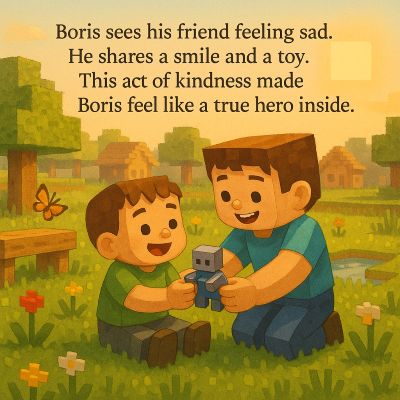
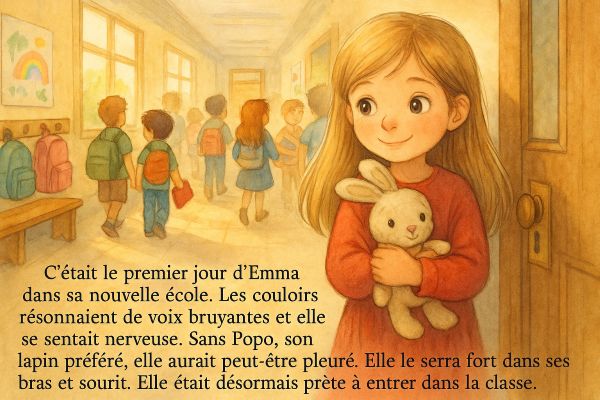
When children encounter their own name, face, and family within a story, they experience what psychologists call the mirror effect — a moment of self-recognition that strengthens their sense of identity and belonging. Studies on representation in children’s literature show that kids who see themselves reflected in stories develop greater confidence, empathy, and motivation to read.
“I am worthy of stories. I am the hero.” — MIBOOKO Research, edition: 2024
2️⃣ Early Literacy & Focus
Personalization increases attention span and recall.
Studies show that when a story includes familiar details — a child’s name or environment — comprehension scores can rise by up to 30%.
This happens because the story becomes emotionally anchored in reality, strengthening both language acquisition and memory.
3️⃣ Parent–Child Bonding
Shared storytelling strengthens emotional connection.
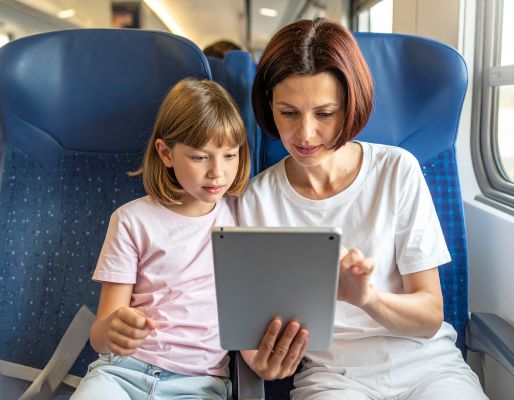
Personalized reading increases smiles, laughter, and verbal engagement from both parent and child — fostering empathy and “higher-order thinking talk,” a key driver of cognitive growth.
“The shared act of storytelling isn’t just learning — it’s love in motion.” — MIBOOKO Research, edition: 2025
What Educators and Psychologists Are Saying
Citations provided are not sponsored by MIBOOKO.COM, and neither the institutions nor individuals quoted here have any business relationship with MIBOOKO.COM
What Global Child-Development Researches Say
The National Literacy Trust (UK)
Reading enjoyment is a stronger predictor of success than socio-economic status.
Parent-Child Engagement Studies
Personalization doubles verbal interaction during shared reading.
Educational Psychology Research
Hyperpersonalized stories improve comprehension by 30%.
Bibliotherapy Frameworks
Personalized narratives help children safely explore and resolve fears.
Experience the Power of Stories Backed by Science
Every MIBOOKO book is a joyful reading experience — and a scientifically grounded step in your child’s development. Here are some of our latest research releases. Please also visit our Spotify podcast to learn more.
Interested in continuous, chapter-by-chapter stories for bedtime? Start with the MIBOOKO Storybook Guide →
MIBOOKO Research: The Mirror Effect – The Science of Self-Relevance in Children’s Narrative Development (2026 Edition)
[Download PDF]
MIBOOKO Research: The Strategic Role of Hyperpersonalized Narratives in Child Development (2025 Edition)
[Download PDF]
FAQ
IBOOKO’s emphasis on “Science + Storytelling” is foundational because research confirms that the quality of media, not the quantity of screen time, determines the impact on children’s learning outcomes. Many commercially produced digital books and apps are known to be of low educational value, lack clear learning goals, and contain distracting features. Such unspecified or generic content has shown a near-zero or non-significant association with children’s vocabulary acquisition in naturalistic settings.
To mitigate these risks, MIBOOKO adopts a quality-first approach:
Purposeful Design: Content is explicitly guided by pedagogical insights and focused on three pillars: Empathy & Self-esteem, Early Literacy & Focus, and Parent-Child Bonding. This design contrasts with generic entertainment, which often yields minimal learning effects.
* Human-Augmented AI: The platform avoids generating stories “from scratch” using only AI; instead, AI acts as an augmentation tool to scale personalization within narrative frameworks defined by humans. This structured process ensures author-level quality.
* Congruency: High-quality design requires that multimedia and interactive features are congruent with the story, supporting the narrative rather than distracting from it. Distracting features consume cognitive resources needed for comprehension.
Storybook reading is a critical activity for cultivating empathy, a trait highly valued by parents (alongside honesty and self-regulation). Stories systematically support four key empathy-related skills: perspective-taking, theory of mind, emotional vocabulary/understanding, and prosocial behavior.