

























人工智能与人类创作的儿童故事:优势、局限性以及家长须知

What if the most meaningful story your child ever hears wasn’t written by a single person, but was shaped specifically for their unique heart? You’ve likely noticed the flood of “junk” books on digital marketplaces that feel hollow or mass-produced. As a parent, it’s natural to feel wary about the rise of AI vs human-written children’s stories, especially when so much automated content lacks the emotional depth and safety your family deserves.

We agree that you want more than a novelty; you want a story that supports your child’s development and makes them feel truly seen. This article will help you evaluate these options to find a book that balances intelligent personalization with genuine care. We’ll explore the limits of automated stories, the importance of privacy, and how to choose a premium keepsake designed to encourage a lifelong love of reading.

Key Takeaways

  • Learn how to distinguish between mass-produced content and meaningful narratives by understanding the evolving landscape of AI vs human-written children’s stories.
  • Discover why emotional intelligence and developmental milestones are the keys to finding stories that truly support your child’s growth and confidence.
  • Explore how to achieve deep personalization for your little hero through appearance-based customization while avoiding the privacy risks of photo uploads.
  • Identify the specific quality markers that separate a thoughtful personalized story experience from a generic or “junk” AI-generated book.
  • Find out how to integrate “endless” storytelling into your family’s evening rituals to foster a lasting bond and a love of reading.

Table of Contents

AI vs Human-Written Children’s Stories: Understanding the Narrative Landscape

The nursery bookshelf looks different in 2026. By May 2025, AI-generated content accounted for more than 51% of English-language web URLs; inevitably, this technology moved into children’s publishing. You might feel overwhelmed by the sheer volume of choices. The core of the AI vs human-written children’s stories debate isn’t about the tech itself. It’s about whether the story actually sees your child. Many parents worry that technology might strip the warmth from a bedtime routine. It’s a valid concern. If a book feels mechanical, your child will sense it. However, the most important factor isn’t who held the pen. It’s how deeply the narrative engages the young reader’s imagination and supports their emotional growth.

Studies suggest that children aged 6 to 10 often struggle to tell the difference between human and AI content. This places a greater responsibility on the parent to curate what enters the home. When you choose a book that prioritizes engagement, you aren’t just buying a product; you’re investing in a tool that can help your child build literacy and confidence. The goal is to find a balance where modern efficiency meets the timeless soul of a good story.

The Rise of Automated Storytelling

Generic tools have flooded marketplaces with “hollow” scripts. These books often lack a cohesive theme. They might follow a pattern but miss the soul. When stories feel mass-produced, children often lose interest quickly. You’ve probably seen these “junk” books; they are the digital equivalent of empty calories. They might have bright colors, but the narrative often feels disjointed or repetitive.

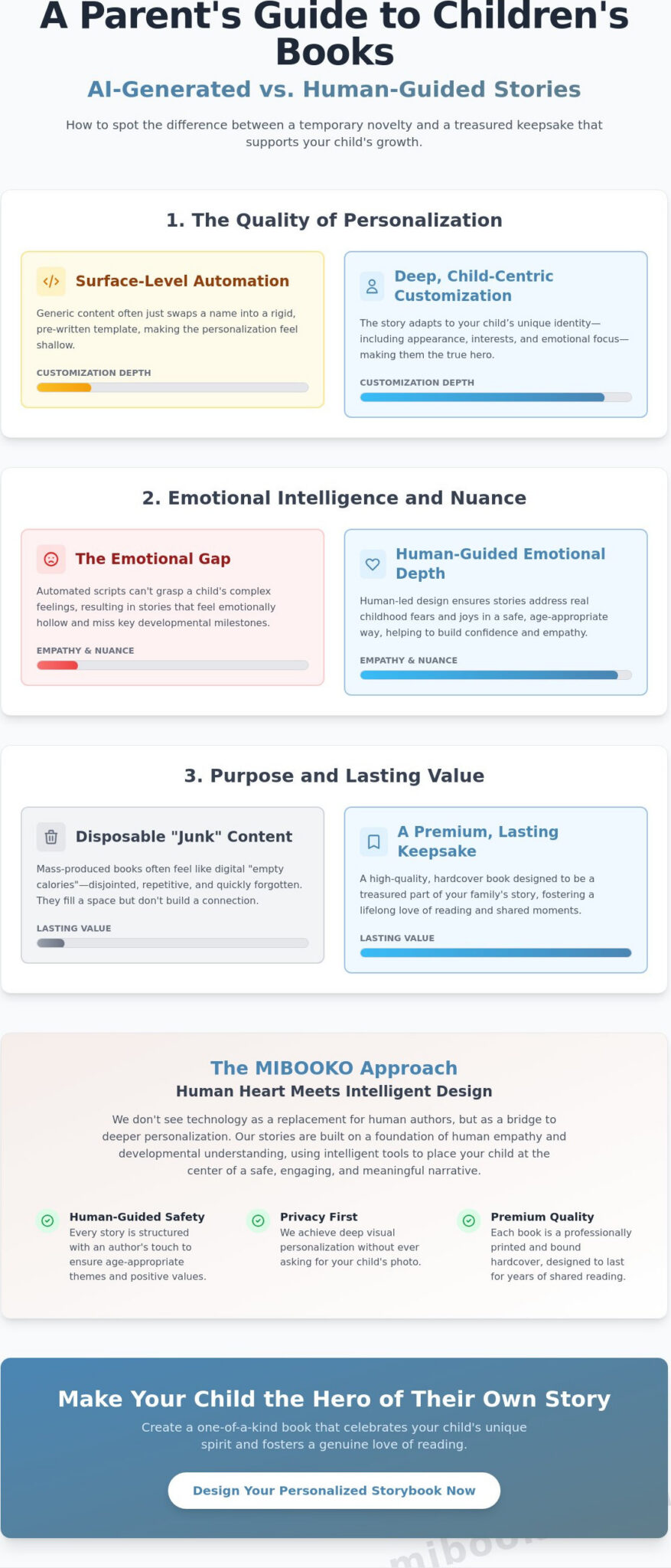
While artificial intelligence in fiction was once just a plot point in sci-fi, it’s now a tool that can either create clutter or facilitate connection. Discriminating parents are moving away from generic automation. They are looking for products that combine efficiency with a high-quality, premium feel. Mass-generated content usually relies on static templates where only a name is swapped out. In contrast, truly personalized narratives adapt to your child’s specific interests and emotional needs. This level of detail is what transforms a simple reading session into a moment of genuine connection.

The Role of the Human Author in the Modern Era

Human-led design provides a safety net. An author understands the nuance of a child’s fears or the pride in a small achievement. This empathy allows for stories that address complex emotions in an age-appropriate way. It ensures that the hero’s journey feels earned and safe. Human authors can weave in developmental scaffolding that an unguided algorithm simply cannot replicate.

Narrative heart is the emotional bridge between the story and the child’s reality.

At MIBOOKO, we don’t view technology as a replacement for the author. We use it as a bridge to personalized storybooks that place your child at the center of the action. This approach helps every story feel intentional and emotionally relevant rather than like a disposable novelty. By blending research-backed methodologies with intelligent design, we create a space where your child’s unique identity can shine.

The Emotional Nuance Gap: Why Empathy Matters in Kid’s Books

Empathy isn’t just a feeling; it’s a developmental bridge. While algorithms are excellent at predicting which word logically follows another, they don’t understand the heavy silence of a child’s first night in a new room or the specific pride of tying a shoe for the first time. This is the “emotional nuance gap” in the AI vs human-written children’s stories conversation. For a young reader, a story acts as a mirror. When they see a hero who shares their specific traits and challenges, they learn to navigate their own world with more confidence and self-awareness.

Recent research on children’s ability to discern AI content suggests that while younger readers might not always spot technical differences in text, they certainly feel the difference in emotional weight. A story that misses the “small” moments can feel sterile. Human-guided narratives prioritize these milestones because they understand the logic of childhood. They recognize that a story about a missing teddy bear is actually a story about security and love. Generic AI often misses these subtle layers, focusing instead on surface-level plot points that fail to resonate on a deeper level.

Building Confidence Through Relatable Heroes

When you choose personalized books for kids, you give your child a safe space to practice bravery. Being the protagonist is about more than seeing a name on a page. It’s about seeing their interests and fears validated. This intentional mirroring can support self-esteem and encourage reading engagement by making the narrative feel deeply personal. It bridges the gap between fantasy and reality, showing them that they are capable of being the hero in any situation.

You can make your child the hero of their own book and see how these tailored details help them feel truly seen and understood during your evening reading ritual.

Human vs AI: A Comparison of Storytelling Strengths

Speed and data are AI’s strengths, but they aren’t enough to build a lasting keepsake. A hybrid approach is often superior. By using human-designed frameworks, MIBOOKO is designed to keep stories developmentally appropriate and emotionally supportive while using technology to tailor the details to your child. This method preserves the “narrative heart” while offering the variety that keeps kids excited about their next chapter.

FeatureGeneric AI StoriesHuman-Guided Personalization
Emotional DepthPattern-based mimicryGenuine emotional resonance
Safety & LogicRequires heavy filteringInherent developmental logic
CustomizationBasic name swappingDeep identity mirroring
Narrative FlowOften repetitive or disjointedCohesive hero’s journey

Empathy in storytelling requires an intentional focus on the reader’s developmental stage.

By focusing on human-centered design, we can use technology to enhance the bond between caregiver and child. This ensures that the AI vs human-written children’s stories debate results in a win for your family: a high-quality, premium book that supports emotional intelligence and creates a meaningful family moment.

AI vs Human-Written Children’s Stories: Strengths, Limits, and What Parents Should Know

Personalization vs Automation: Redefining the Hero’s Journey

The difference between a mass-produced book and a personalized adventure lies in the intention behind the design. Automation often feels like a shortcut, creating “one-size-fits-all” content that swaps a name but leaves the heart of the story untouched. When we evaluate AI vs human-written children’s stories, we must look at how technology is being used. Is it churning out generic scripts, or is it enabling a level of customization that makes a child feel truly represented? Using technology as a tool for inclusion allows every child to see themselves as the lead in a narrative built just for them.

Recent findings from Stanford’s Human-Centered AI institute show that differentiating between human and AI-generated text is harder than most people realize. This reality places a premium on brands that use technology as a tool for human-centered storytelling rather than a replacement for it. For reluctant readers, seeing their own traits and interests woven into the plot can be the spark that turns a chore into a joy. A child who struggles to sit still for a generic tale might find themselves captivated when the hero has their same messy hair and loves the same dinosaurs. According to MIBOOKO research, this deep level of engagement can support literacy and help children develop a stronger emotional connection to the narrative.

The Power of Customization Without the ‘Uncanny Valley’

Many parents feel wary about uploading their child’s photo to a server, and for good reason. Privacy is a significant concern. Beyond safety, there is the “uncanny valley” effect; a static photo can sometimes pull a child out of the imaginative world. By choosing specific features like hair color, eye shape, and personal interests, you allow your child to inhabit the character’s shoes more naturally. This approach positions the parent as a co-creator. You aren’t just buying a book; you’re helping build a hero that reflects your child’s unique identity. This intentional design is a key differentiator when comparing AI vs human-written children’s stories.

Beyond the Name: Personalizing the Emotional Arc

A story becomes a keepsake when it speaks to a child’s current reality. Moving past basic name-swapping allows the narrative to address specific milestones. Perhaps your child is nervous about starting school or is adjusting to a new sibling. Tailoring the story’s emotional arc to these skills and challenges in storybooks makes the experience a developmental tool. It’s designed to encourage resilience and empathy. When the hero faces a fear that the reader also feels, the lesson sticks. This is where intelligent personalization outshines simple automation, providing a narrative that evolves alongside your child’s growing world.

How to Evaluate Quality in Your Child’s Next Storybook

Selecting a book for your child’s collection shouldn’t feel like a gamble. With the rise of AI vs human-written children’s stories, the market is crowded with options that look good on a screen but fall flat during a bedtime reading. To find a story that truly resonates, you need to look past the cover. A high-quality book acts as a developmental tool, designed to encourage curiosity while providing a sense of security. Evaluating quality means looking for intention in both the words and the design.

When you browse for your next story, use this checklist to distinguish a thoughtful personalized experience from generic AI novelty content:

  • Narrative Cohesion: Does the personalization feel like a natural part of the plot, or is the child’s name simply swapped into a static template?

  • Developmental Logic: Is there evidence of research-backed design that supports age-appropriate emotional growth?

  • Format Quality: Is the story available in the format your family needs, such as a digital edition, audiobook, paperback, or hardcover keepsake?

  • Artistic Consistency: Do the illustrations maintain a high standard throughout, accurately reflecting the hero’s personalized traits on every page?

The ‘Kid-First’ Standard for Storybooks

A story for a 3 to 7 year old needs to do more than just relay facts. It should use engaging, rhythmic language that invites your child to participate. If the text feels clunky or overly complex, the connection is lost. A quality personalized story should feel emotionally relevant, age-appropriate, and easy to return to. It should be a story your child asks for again and again because they see their own world reflected in the hero’s journey. Look for narratives that spark questions and turn reading into a conversation between you and your little one.

Technical Red Flags to Avoid

Unedited AI scripts often leave behind clues of their automated origin. Watch out for repetitive phrasing or “hollow” vocabulary that adds no value to the story. If a plot lacks a clear moral or emotional resolution, it likely wasn’t guided by a human-centered design. Inconsistent illustrations are another warning sign; if the hero’s appearance shifts mid-story, it can confuse a young reader and break the immersion. These gaps are common in mass-produced content, which is why premium, intentionally designed books should be guided, checked, and built around a coherent narrative framework.

You can see how we prioritize these quality standards by exploring how MIBOOKO works to create a narrative that lasts. By focusing on the connection between caregiver and child, MIBOOKO is designed to make each story feel personal, safe, and meaningful.

The MIBOOKO Approach: Human Heart Meets Intelligent Design

The choice between AI vs human-written children’s stories doesn’t have to be a compromise. At MIBOOKO, we’ve built a bridge between the precision of modern technology and the warmth of a parent’s voice. We don’t believe in mass-generated content that feels empty. Instead, we use intelligent design as a tool to facilitate the deeply personal moments that happen every night at bedtime. Our approach isn’t about replacing the author; it’s about empowering you to become the curator of your child’s emotional growth and imaginative world.

By moving beyond simple automation, we’ve created a system where your child’s identity is the foundation of every plot. This isn’t a one-time novelty. Whether you choose our hardcover storybooks for kids or explore the evolving world of our endless books for kids, you’re investing in a premium product. These are designed to be part of your family’s history, sitting on the shelf long after the first reading. This intentional design is a key differentiator when comparing AI vs human-written children’s stories, ensuring the narrative remains grounded in developmental psychology.

Crafting a Unique Adventure

The process of building your book is designed to be as rewarding as reading it. You start by selecting the traits that make your child who they are: their appearance, their name, and the specific interests that make their eyes light up. This isn’t a “photo-swap” shortcut. It’s an intentional creative act that keeps your child’s privacy safe. The MIBOOKO methodology ensures that every story remains developmentally sound and emotionally supportive. We’ve removed the risks associated with photo uploads, focusing instead on a guided experience that turns your choices into a personalized story your family can enjoy digitally, as audio, or as an optional printed keepsake.

Creating Lasting Memories

A book that features your child as a brave, kind hero does more than entertain. It builds a foundation of confidence. These stories are ideal for marking special milestones or simply enhancing the quiet ritual of a bedtime story. When a child sees themselves navigating challenges and succeeding inside the narrative, they can carry that feeling into their real-world adventures. This is the true value of a personalized narrative. It’s an investment in your child’s emotional library that supports their literacy and self-esteem for years to come. We believe every child deserves to see themselves as the hero of a story that was made just for them.

If you’re ready to start this journey, you can create a personalized storybook for your child today. We’re here to help you make your little reader the protagonist of their very own adventure.

Empowering Your Little Hero Through Story

Choosing the right narrative for your child is a profound act of love. We’ve explored how the landscape of AI vs human-written children’s stories is shifting, emphasizing that the most impactful books are those that prioritize your child’s emotional safety and unique identity. By focusing on deep personalization and research-backed design, you can move past generic automation and find a story that truly resonates.

Remember that a quality personalized story is defined by its ability to mirror your child’s world while remaining safe, age-appropriate, and emotionally meaningful. Whether it’s a birthday gift or a new addition to your bedtime ritual, the right book supports literacy and builds lasting confidence. You can choose from premium hardcover or paperback options and enjoy deep personalization without ever needing to upload a photo.

Make your child the hero of their own adventure today. Your child is already the hero of your heart; now, it’s time for them to see themselves inside a story made for them. We’re honored to help you create these lasting family moments.

Frequently Asked Questions

Are AI-written children’s stories as good as human-written ones?

The quality of a story depends on the human intention and developmental research behind the technology. While algorithms can mimic narrative structures, they often lack the deep empathy and emotional nuance found in human-authored books. The debate over AI vs human-written children’s stories highlights this “empathy gap.” A story created solely by an algorithm may feel repetitive, while human-guided narratives can be designed, checked, and structured to better support safe, age-appropriate storytelling.

How can I tell if a children’s book was generated by AI without human editing?

You can often identify unedited automated content by looking for technical red flags like repetitive phrasing or inconsistent character traits. These stories frequently lack a clear emotional resolution or a cohesive moral lesson. You might also notice that the illustrations don’t perfectly match the personalized hero’s description. A high-quality book feels intentional and rhythmic, whereas a purely automated script often feels like a series of generic events without a narrative heart.

Is it safe to use AI tools to create stories for my child?

Safety is a priority that depends on how a platform handles your child’s data and privacy. Many generic tools require photo uploads, which can expose personal information to digital risks. It’s safer to choose services that offer appearance-based customization instead of photos. This protects your child’s identity while still making them the hero. Always verify that a platform uses research-backed methodologies to ensure the story content is safe and developmentally supportive.

Why is personalization better than a standard children’s book?

Personalization transforms a quiet reading moment into an active adventure where your child sees themselves as brave and capable. When a child’s name and traits are woven into the plot, it creates an immediate emotional bond with the book. This mirroring can support self-esteem and help children navigate real-world challenges. Unlike standard books, custom narratives can be tailored to your child’s specific milestones, making the lessons feel more relevant and memorable.

Do personalized books actually help with reading engagement?

Personalized books can significantly increase reading engagement by making the story feel relevant to the child’s own life. Seeing themselves as the protagonist often encourages reluctant readers to stay focused and participate in the story. This is a vital factor when comparing AI vs human-written children’s stories. By centering the narrative on the child’s interests, you’re helping them build a positive relationship with literacy that can last a lifetime.

What makes a MIBOOKO story different from a cheap AI book generator?

MIBOOKO distinguishes itself by using human-centered design to create premium keepsakes rather than disposable novelties. We use technology as a tool for deep, safe personalization without ever requiring a photo upload. Our focus remains on the emotional connection between caregiver and child, with flexible formats that can include digital stories, audiobooks, printed books, and future endless story experiences. Unlike cheap generators, we prioritize developmental logic and narrative heart to ensure every story is an investment in your child’s emotional library.

发表评论

您的邮箱地址不会被公开。 必填项已用 * 标注

滚动至顶部

选择一个故事


100% 微笑保证 · 无需照片

100% 满意保证